AI is a Cheat Code for Your Brain
Your forgotten ideas just got a second chance. AI isn't here to think for you: it's here to finally let you build what's been stuck in your head all along.

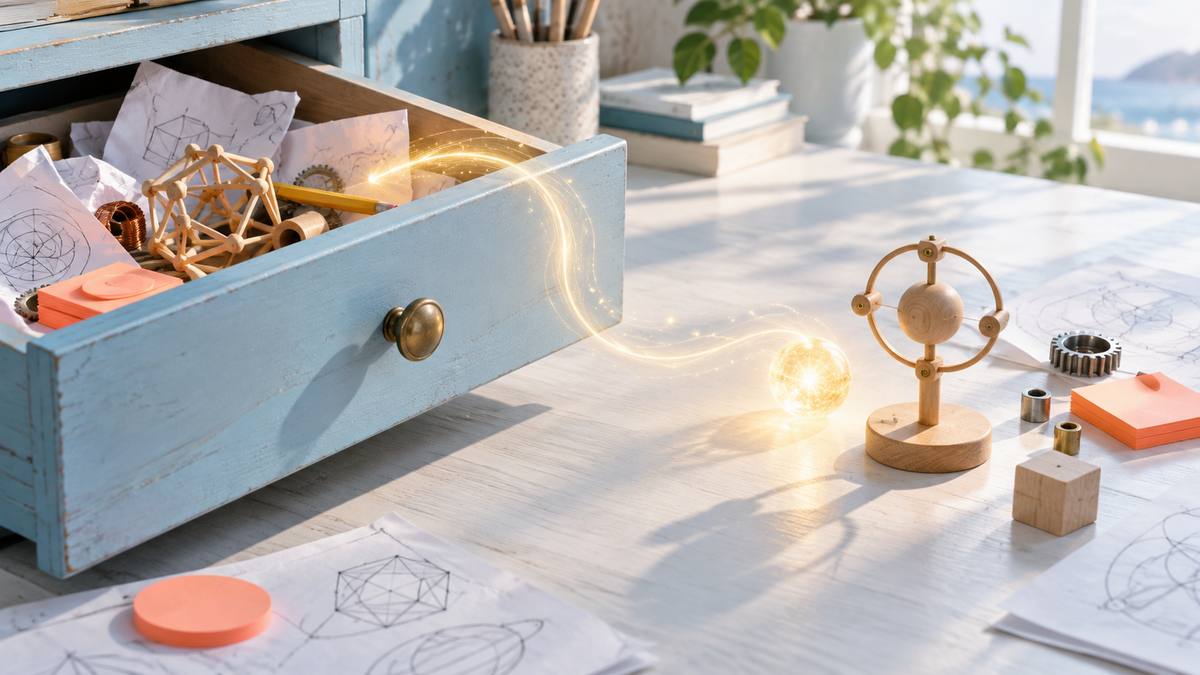
You've got ideas sitting in a drawer somewhere in your mind. Maybe it's an app you wish existed. A business you'd start if only you knew how. A creative project that would be amazing, if you could actually pull it off.
Most of those ideas never made it out of your drawer. Not because they were bad. Because the moment you had them, you did the math: Can I afford to build this? Do I know how? Could I even explain it well enough to convince someone else to help me?
The answer was almost always no. So the idea went back in the drawer. Or it never made it out of your head in the first place.
AI just changed that equation completely.
The Ideas You Never Let Yourself Have
Here's how it used to work. You'd have a spark of inspiration. Something that felt genuinely new, genuinely yours. And then reality would kick in.
Building anything real required money, time, or skills you didn't have. If you wanted to create software, you either learned to code yourself (months or years of study) or you hired a developer (thousands of dollars, plus the nightmare of explaining what's in your head). If you wanted to start a business, you needed capital, connections, a whole team of people who believed in your vision enough to bet their time on it.
So you learned to edit yourself early. Before the idea even fully formed, you'd ask: Is this realistic? Can I make someone understand why this matters? Is it worth the hassle?
Most of the time, the answer was no. You'd feel that familiar weight, that sense of limitation, and you'd move on. The idea would fade. You'd tell yourself it probably wasn't that good anyway.
We all did this. We trained ourselves to dream smaller, not because we lacked imagination, but because the gap between imagining something and making it real was just too wide to cross.
That gap is closing fast.
What the Industrial Revolution Actually Taught Us
Think about what the Industrial Revolution really did. It didn't just make existing work faster. It unlocked entirely new capabilities.
Suddenly, humans could move mountains. Build skyscrapers. Manufacture products at a scale that would have seemed like magic a generation earlier. Things that were physically impossible became routine.
The key wasn't replacing human muscle. It was augmenting it. Giving people the ability to reach beyond their biological limits. A single person operating a crane could lift what a hundred people couldn't budge. A factory worker could produce in a day what would have taken months by hand.
That transformation took generations to unfold. It required massive infrastructure: railroads, power grids, factories. You couldn't just decide to have industrial capability. You needed access to shared resources that took decades to build.
AI is doing the same thing for human imagination. But here's the difference: it's not happening over generations, and you don't need to wait for someone to build the infrastructure.
You've already got it in your pocket.
We all have a mental drawer full of abandoned ideas. AI just handed you the key.
When Building Becomes Thinking
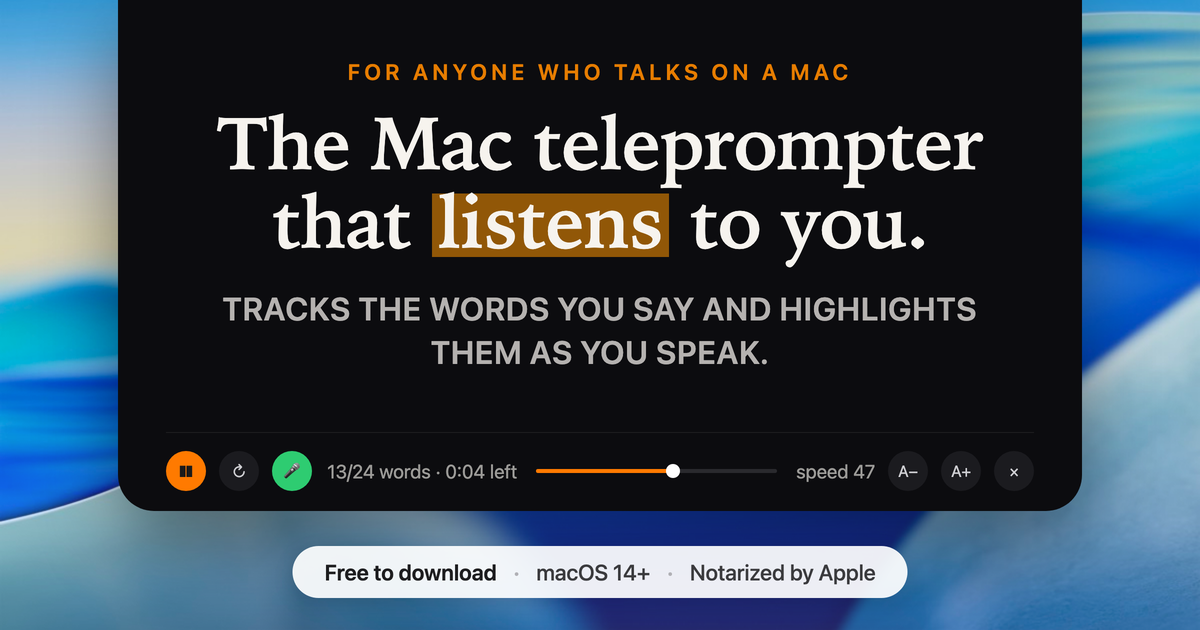
Three months ago, I had a simple problem: I wanted to record videos without looking down at notes. So I built a teleprompter app called Tellie. I'm not a programmer. I used AI. It took three days.
That should be the end of the story. Problem solved, app built, move on.
But something unexpected happened. Features started appearing that I never could have planned.
Voice Follow: the app would track which word I was speaking and let me pause, skip ahead, or go back. Send to Tellie: a way to instantly pull text from anywhere on my Mac without copying and pasting. Presenter Magic: showing my presentation notes invisibly, so Zoom couldn't see them. Then came Stagehand, the wildest one: a teleprompter that knows what you didn't say and helps you cover the important parts without running out of time.
That last one hit me at 3 AM. Not because I sat down to brainstorm features. Because I'd been inside the problem long enough that the problem started talking back.
Here's the thing nobody is talking about with AI: in the old world, you think THEN you build. You come up with an idea, write it down, explain it to someone, wait for them to build it, see if it works. Linear. Slow. Expensive.
With AI, building IS thinking. You start making something, you see how it works, you notice a possibility you didn't see before, and you try it immediately. Right there. No convincing anyone. No writing a document explaining why it matters. The feedback loop collapses completely.
Ideas emerge from being inside the work, not from sitting in a room trying to imagine what might work. You don't plan your way to innovation. You discover it by removing every obstacle between your brain and the thing you're making.
That's a fundamentally different way for a human mind to operate.
Why Everyone Is Looking at This Wrong
I know what people are afraid of. AI is going to outsmart us. Take our jobs. Maybe worse.
I get it. Change is scary. And when the change is this fast, this big, it's natural to focus on the threats.
But here's what everyone is missing: AI isn't here to think FOR you. It's here to remove the word 'no' from your creative process.
For the first time in history, you can go from thought to thing in an afternoon. You don't need permission. You don't need a budget. You don't need to convince anyone that your idea is worth their time.
That locked drawer of ideas? The one full of things you always wanted to make but couldn't? You can open it now.
And here's the really interesting part: you're not just going to build those old ideas. You're going to have NEW ideas you couldn't have had before. Because when there's no friction stopping you from testing something, when you can actually see your idea come to life and interact with it and improve it in real time, your brain starts working differently.
You dive deeper. You notice possibilities you would have missed. You invent things you couldn't have specified in advance because you didn't know they were possible until you were holding them in your hands.
This isn't about AI making you lazy or shallow. It's about removing every barrier that kept your creativity trapped. Billions of people now have access to a tireless companion that helps them go further into their imagination, not around it.
That's not a threat. That's an unlock.
The Rocket Ship Versus the Train
The Industrial Revolution changed everything. It took us from agrarian societies to modern civilization. But it unfolded over generations. Your great-great-grandfather didn't have a factory in his pocket. He had to move to where the factories were. Wait for the railroads to reach his town. Hope someone would hire him.
AI is different. Every single person gets their own genius, right now. You don't need to wait for infrastructure. You don't need permission from gatekeepers. You just need the spark of an idea and the willingness to try.
The Industrial Revolution was a slow train that eventually reached everyone. This is a rocket ship, and you're already on it.
And here's the part that matters most: this isn't just about making things easier or faster. It's about humans reaching a new level of capability. We're not just more efficient. We're fundamentally more powerful.
For the first time, your imagination isn't limited by your ability to explain it, fund it, or find someone to build it. The only limit is whether you're willing to try.
That drawer of abandoned ideas? It's time to open it.
Not because AI will build those ideas for you. Because AI removes every excuse that kept you from building them yourself. The friction is gone. The cost is nearly zero. The only question left is: what have you been wanting to make?
Your brain has been waiting for this moment. Time to let it run.
I gave a keynote on this subject Sept 15, 2026. Enjoy!
About the Author
Steve Chazin makes AI make sense. After three decades leading tech teams at companies like Apple and Salesforce, he's on a mission to show regular people how to use AI without fear or confusion. No hype. No doom. Welcome to the Digital RenAIssance.
If this helped, subscribe at stevechazin.com for weekly updates. And if you know someone who's trying to make sense of AI, forward this to them. We're all learning this together.