The Era of Personal AI Begins (And It's About Time)
Personal AI means your apps, healthcare, and tools adapt to your unique needs instead of forcing everyone into the same box. It handles the repetitive stuff so you can focus on the work only you can do.

TL;DR: For the first time, technology is learning to work the way you do and not the other way around. Personal AI means your apps, healthcare, and tools adapt to your unique needs instead of forcing everyone into the same box. It handles the repetitive stuff so you can focus on the work only you can do.
For fifty years, technology treated us like a crowd. That's ending.
For half a century, technology has treated humans as a collective. We got the same Google results, the same software, the same one-size-fits-all solutions. Doctors prescribed treatments based on population averages. Schools taught curriculum designed for the middle of the bell curve. Apps assumed we all wanted the same features, in the same order, accessed the same way.
That made sense when computing power was scarce and data was expensive to store. But now? Neither of those constraints exist anymore.
We are entering the era of personal AI. Not artificial intelligence that replaces us, but intelligence that adapts to us. Medical care tailored to your body, your history, your wrist data. Education shaped around how you learn, not how a textbook assumes you should. Apps that materialize on demand because you need them, not because a product team guessed six months ago that someone like you might.
This is not science fiction. It is happening now.
When Your Watch Knows More Than Your Doctor Has Time to Learn
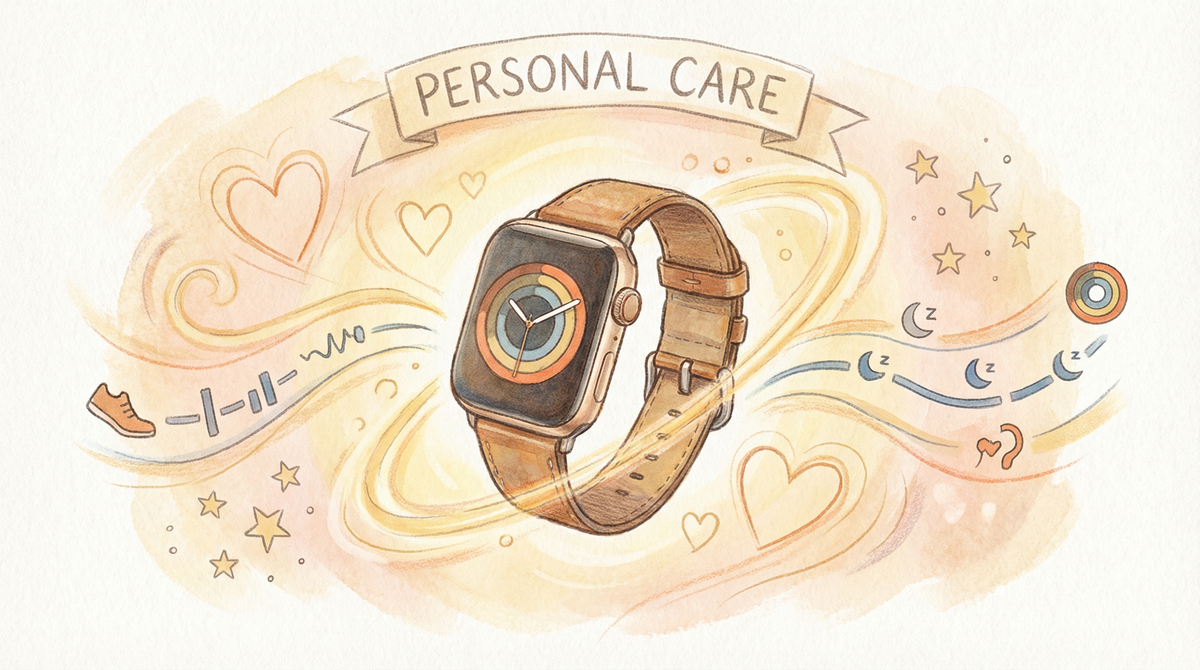
I posted a comment on LinkedIn recently that resonated with more people than I expected. The beauty of AI, I wrote, is it has plenty of time and lots of data. Humans tend to be treated collectively and not individually because doctors have little time and generic data. Imagine the benefit of AI creating custom solutions for individual patients based upon data that was never reviewed before because it was locked in your wrist on your Apple Watch.
Think about that for a moment. Your heart rate variability at 3am. Your sleep patterns over six months. The correlation between your step count and your mood. Your glucose response to specific foods. All of it is there, timestamped and ready. But no human doctor has three hours to analyze it before your fifteen-minute appointment.
An AI does. And it never gets tired, never misses a pattern, and never forgets what worked for you last time.
This is not about replacing physicians. It is about giving them a partner with infinite patience and perfect recall, so they can spend their limited time doing what only humans can do: listening, caring, and making judgment calls that require wisdom, not just data.
The Real Promise: Unlocking Human Creativity
Here is the part that excites me most. The era of Personal AI will unlock human creativity because AI can work on the stuff that currently takes all our time.
Imagine spending your day on the work that matters to you, the work only you can do, while an AI that knows your preferences, your voice, and your goals handles the repetitive tasks. Not someday. Right now.
I have been living this for months with OpenClaw, my own AI assistant. It knows how I write. It learns from my edits. It drafts replies to emails, organizes my notes, searches my archives, and even writes first drafts of content in my voice. It works 24/7. It never complains. And every week, it gets a little better at being my partner instead of just my tool.
This is not a luxury product for executives. This is the beginning of a shift that will reach everyone. Personal AI that knows your schedule, your priorities, your communication style. That can draft the email, research the question, summarize the meeting, and free you to do the thinking, creating, and connecting that only you can do.
When I worked at Apple, the goal of our tech was simple even as technology in that day was difficult. We felt that if our products could remove the drudgery of work, it would free us all for the truly human acts of thinking and creating. Recently, Tim Cook said of Steve Jobs something very similar:
He spoke with charisma and clarity — about a future where technology could unlock a wellspring of human creativity and potential, connecting us and uplifting us in ways even he had yet to imagine.
"Tim Cook sums up Steve Jobs in just four words" - David Price, Macworld
What Happens When Everything Adapts to You?
For fifty years, we adapted to technology. We learned its language, followed its rules, bent ourselves to fit its limitations.
Now, for the first time, technology is learning to adapt to us.
Your AI tutor will teach the way you learn. Your AI health coach will work with your actual body, not a population average. Your AI assistant will know that you prefer phone calls over emails, that you think better in the morning, that you need reminders phrased as questions, not commands.
This is not about convenience. It is about finally using technology the way we always should have: as an amplifier of human potential, not a replacement for it.
The printing press did not eliminate writers. It made more of them. The internet did not eliminate creators. It multiplied them.
Personal AI will not eliminate human creativity. It will unleash it.
The Uncomfortable Truth We Have to Say Out Loud
I made another comment to Misha Teplitskiy on X about what researchers really do, which resonated with many people:
This cuts to the heart of every profession right now. When the grunt work vanishes, what's left is the part that actually matters. For researchers, it's thinking. For designers, it's taste. For engineers, it's judgment about what to build. I've watched this play out in four different startups I launched. The people who thrived weren't the ones who could crank out the most work. They were the ones who knew what work was worth doing. AI doesn't replace thinking. It just makes it impossible to hide behind busywork. That's terrifying if you've been coasting. It's liberating if you actually love the craft.
Of course, this does sound terrifying if you have been coasting. If your job is doing things AI can now do faster, cheaper, and more accurately, yes, that job will change and maybe disappear.
But if you love the craft, if you care about the outcome, if you want to spend your time on work that matters instead of work that just fills time, this is the most liberating moment in history.
The bottleneck is no longer "Can I do this?" It is "Is this worth doing?"
That is a better question. A more human question.
So What Will You Create?
The era of "I do not know how" is ending. The era of "I have an idea" is beginning.
What will you make when the only constraint left is your imagination? Welcome to the Digital RenAIssance.
About the Author
Steve Chazin makes AI make sense. After three decades leading tech teams at companies like Apple and Salesforce, he's on a mission to show regular people how to use AI without fear or confusion. No hype. No doom. Welcome to the Digital RenAIssance.
If this helped, subscribe at stevechazin.com for weekly updates. And if you know someone who's trying to make sense of AI, forward this to them. We're all learning this together.
