How AI Actually Works
What happens when you hit send in ChatGPT? Learn how AI predicts words, why it hallucinates, and what tokens really are. Plain talk, no jargon.

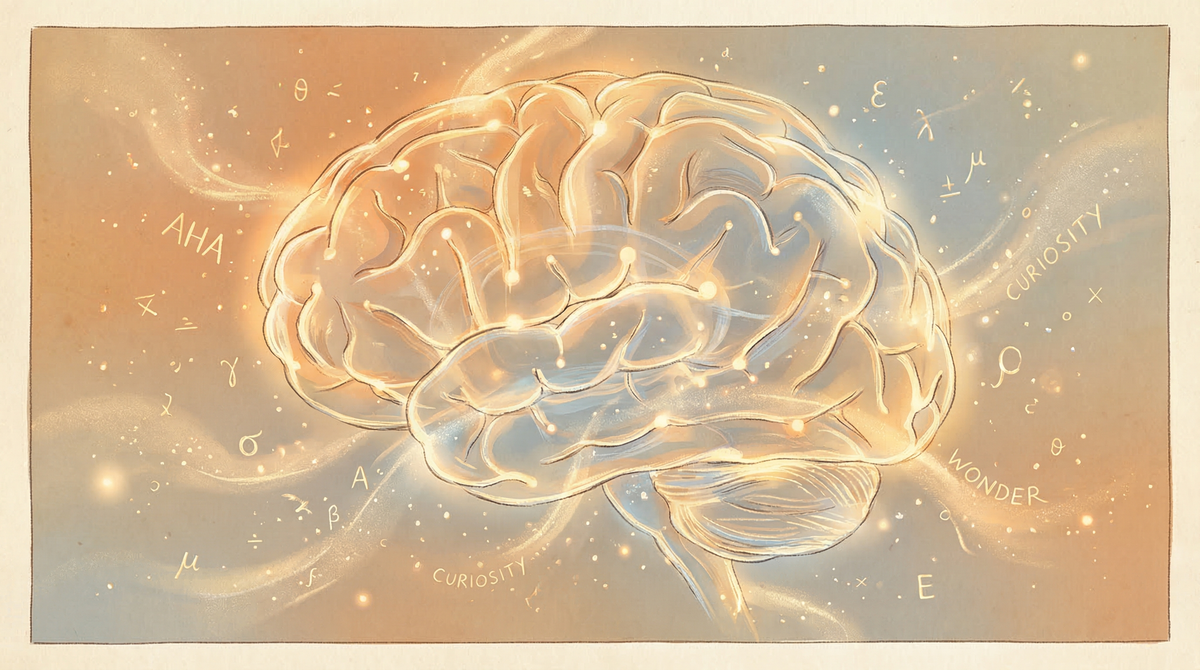
TL;DR: AI doesn't "know" anything. It's incredibly good at predicting what word should come next based on patterns from billions of examples. Once you understand this, you'll use it better and trust it appropriately.
The Promise I Made You
A few days ago, I told you I'd explain what's actually happening under the hood when you chat with AI. No jargon. No computer science degree required. Just the plain truth about how these systems work.
Here's why this matters: Once you see how AI actually operates, you'll know when to trust it, when to verify it, and how to get better results. Think of it like understanding how your car engine works. You don't need to be a mechanic, but knowing why it needs oil and gas makes you a smarter driver.
So let's lift the curtain.
What Happens When You Hit Send
You type "What's a good recipe for chicken soup?" into ChatGPT or Claude or Gemini. You hit send. Three seconds later, a perfectly formatted recipe appears.
What just happened?
Here's what didn't happen: The AI didn't "think" about chicken soup. It didn't remember its grandmother's recipe. It didn't taste anything. It didn't consult a cookbook.
Here's what did happen: Your question got broken into tiny pieces called tokens. Then a massive mathematical system looked at those pieces and calculated what words are most likely to come next based on patterns it learned from billions of examples.
That's it. That's the whole magic trick.
Training Day (All 10 Million of Them)
Before ChatGPT could answer your first question, it spent months reading. And I mean reading everything. Books, websites, articles, conversations, code, poetry, instruction manuals. Billions of pages of text.
But here's the critical part: It wasn't memorizing facts. It was learning patterns.
Think of a child learning language. They don't memorize "The capital of France is Paris" as a fact file. They hear thousands of sentences where "Paris" shows up near "France" and "capital" and their brain builds connections. That's essentially what happens during AI training, except instead of a few thousand examples, we're talking about exposure to most of human written knowledge.
This is called training data, and it's why these systems are called Large Language Models or LLMs. They're massive pattern-matching machines trained on language.
The neural network inside adjusts billions of tiny connections (called parameters) until it gets really, really good at predicting what word should come next in any given context.
Notice I said "predicting," not "knowing." This distinction is everything.
Ok, but how does the magic trick actually work?
This process of the AI responding to your query is called inference. While training happened once (when the model learned patterns from billions of examples), inference happens every single time you use AI. It's the difference between a chef learning recipes in culinary school (training) and cooking your dinner tonight (inference). Training was expensive and slow. Inference needs to be fast and happen millions of times per day. That's why companies are spending more on inference than training for the first time.
The Difference Between Prediction and Understanding
When I ask AI "What year did World War II end?" and it answers "1945," did it understand my question?
Not the way you and I understand things.
It recognized the pattern of those words appearing together in its training data. It calculated that "1945" is the word most likely to complete that sentence. It gave the right answer through pattern matching, not comprehension.
This is why AI can write a beautiful essay about heartbreak without ever feeling sad. It's why it can explain quantum physics without understanding a single equation. It's matching patterns from millions of examples where those concepts appeared together.
For most practical purposes, this works shockingly well. The patterns in human language are rich enough that predicting the next word based on context gets you 90% of the way to useful answers.
But that missing 10%? That's where things get interesting.
Why AI Makes Stuff Up
You've probably heard the term hallucination when people talk about AI mistakes. It's a good word for a weird phenomenon.
Sometimes AI will confidently give you a completely wrong answer. It'll cite a book that doesn't exist. It'll invent a statistic. It'll describe a historical event that never happened. It will find an error in your resumé because you asked it to look for mistakes.
Why?
Because it's doing exactly what it was trained to do: predict what word comes next. When it doesn't have enough pattern data to make a confident prediction, it doesn't say "I don't know." It keeps predicting anyway, and sometimes those predictions lead somewhere fictional.
Think of it like autocomplete on steroids. Your phone's keyboard suggests the next word based on what you've typed before. Usually it's helpful. Occasionally it suggests something hilariously wrong. AI hallucinations are the same mechanism, just more sophisticated and harder to spot.
This is why I never use AI for medical advice without verification. Why I double-check any statistic it gives me. Why I treat it as a first draft, not a final answer.
But here's the thing: knowing this doesn't make AI less useful. It makes you better at using it.
Context Is Everything
Here's something fascinating: currently, AI doesn't remember previous conversations the way you and I remember lunch yesterday.
When you're chatting with ChatGPT, every time you send a message, the system sees your entire conversation history as one long prompt. It reads it fresh each time and predicts the next response based on all that context.
This is why you can say "Can you make it shorter?" and AI knows what "it" refers to. Not because it remembers, but because your whole conversation is right there in its current context window.
It's also why conversations eventually "forget" early details. The context window has limits. After enough back and forth, the beginning of your chat falls off the edge, and AI can't see it anymore.
Understanding this changes how you work with AI. Want better results? Give it better context. Be specific. Remind it of important details. Think of every prompt as a fresh start with your conversation history attached.
What This Means For You
I've spent 30 years watching people struggle with technology they don't understand. What makes AI different is that it works well enough to be useful even if you don't know how it works.
But once you do understand it, everything changes.
You stop asking it to "know" things and start asking it to "predict based on patterns." You verify numbers instead of trusting them blindly. You give it rich context instead of vague questions. You use it as a thought partner, not an oracle.
For the past 50 years, truly harnessing computer technology required speaking the machine's language. That era is over. But understanding how the machine thinks? That's still incredibly valuable.
AI isn't magic. It's math. Really impressive, sometimes startling, occasionally wrong math.
And now you know how the magic trick works.
I just published a complete AI Glossary with plain-talk definitions of 15+ terms. If anything in this article made you curious about the technical side, start there. No jargon. Just clear explanations.
What questions do you still have about how AI works? Reply and let me know what I should tackle next.
Steve Chazin makes AI make sense. After three decades leading tech teams at companies like Apple and Salesforce, he's on a mission to show regular people how to use AI without fear or confusion. Welcome to the Digital RenAIssance. stevechazin.com
