AI Can Catch the Pattern. But Who Catches the Bias?
Police departments are adopting artificial intelligence faster than lawmakers can write the rules. This isn’t about machines taking over streets like RoboCop. It is about how everyday tools are beginning to change community safety, and why clear boundaries matter more than ever.

A note from Steve
I launched Tellie on ProductHunt today! If you are enjoying this free newsletter, would you please click the link below and upvote Tellie for me? I truly appreciate it. This will make the hard work of building my first Mac app with AI worth it. It also helped me learn the truth about vibe-coding to share with all of you. Thanks! - Steve

The Human Way
When my mother worked at an answering service in the 1970s, every call was handled by a person listening closely to the details. She knew exactly who called, what they needed, and why it mattered. We didn't have algorithms deciding when to dispatch help or how to route emergencies. We had people - like my mom - who looked each other in the eye and made judgment calls based on shared experience and human connection.
Technology has a way of outpacing human expectations more often than we admit. I saw it happen with file sharing back when every executive said it would destroy the music industry. Then along came iTunes and the problem was largely solved. We don't need to stop inventing. We need to figure out how to use new tech without losing our way.
The Quiet Shift in Community Safety
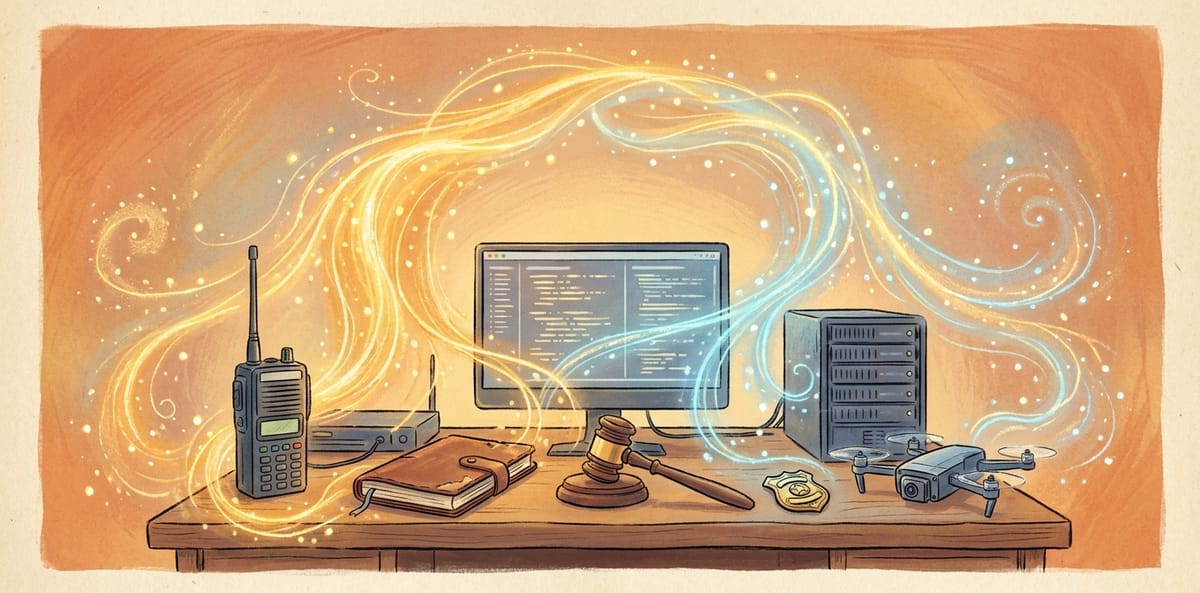
Police departments are quietly building systems that draft reports, analyze crime patterns, and flag suspicious video footage. The Journal-News recently noted these tools are spreading faster than local ordinances can catch them. That tension between speed and oversight is exactly where we need to pay attention right now.
Think of it like a restaurant kitchen. You hire an excellent chef who knows exactly how to balance flavors and manage the evening rush. The AI is the sous chef that prepares ingredients, suggests timing, and catches obvious mistakes before they reach the pass. But you still need a head chef tasting every plate, adjusting seasonings, and deciding which dishes actually reach the customer.
I helped build safety systems at Alarm.com using ambient sensing to detect falls and trigger emergency alerts. People worried about cameras in their living rooms, so we focused on what the sensors actually measure: motion patterns and behaviors, not video recordings.
We found that the technology only works when people trust how it works.
Predictive policing raises real questions about bias and transparency. Algorithms trained on historical arrest data will inevitably reflect past policing choices, whether fair or flawed. That is a valid concern that deserves plain talk instead of panic.
We've survived this before. The 1980s brought computerized police databases promising to predict crime hotspots. Critics warned about tracking innocent neighborhoods. Minority Report scared people into what might happen.
Governments eventually added oversight committees, audit trails, and public reporting requirements. The prediction models evolved because watchdogs forced them to.
We don't need to stop inventing. We need to figure out how to use new tech without losing our way.
Speed Meets Common Sense
The core lesson is simple. Artificial intelligence drafts the first version of almost everything it touches, but human judgment must approve the final call. This is the 80/20 rule in action across every industry. The machine gets you eighty percent of the way there in five percent of the time, and you handle the last twenty percent with care.
When a police department uses AI to summarize incident reports, it frees officers to spend more time on patrol and less time at a desk. When cities deploy pattern analysis for resource allocation, they stop guessing which neighborhoods need extra visibility and start using actual data.
It's not about if we can build these systems: it's whether we'll govern them with clear standards that protect civil liberties while improving public safety.
I don't believe we need to choose between progress and protection. We just need to realize that every new tool requires a matching set of guardrails before we hand it to the front lines. The Digital RenAIssance isn't happening because computers got smarter. It is happening because regular people finally gain the power and the understanding for how to steer them without fear or confusion.
AI for the rest of us stops being a buzzword when everyday citizens claim the tools and shape the boundaries. It starts with asking how these systems actually work, who benefits from them, and what happens when they get it wrong.
I want to hear how this lands for you. Are you seeing AI tools change community safety in your area? Hit reply and tell me. I read every message, and your real-world experience is the best way to keep this conversation grounded.
Steve Chazin makes AI make sense. After three decades leading tech teams at companies like Apple and Salesforce, he's on a mission to show regular people how to use AI without fear or confusion. Welcome to the Digital RenAIssance. stevechazin.com
