We're Afraid of Our Best Invention Because of Its Name
You already trust AI with your safety and health every single day. The real problem? A branding disaster from 1956 that makes people fear the tools they need most.

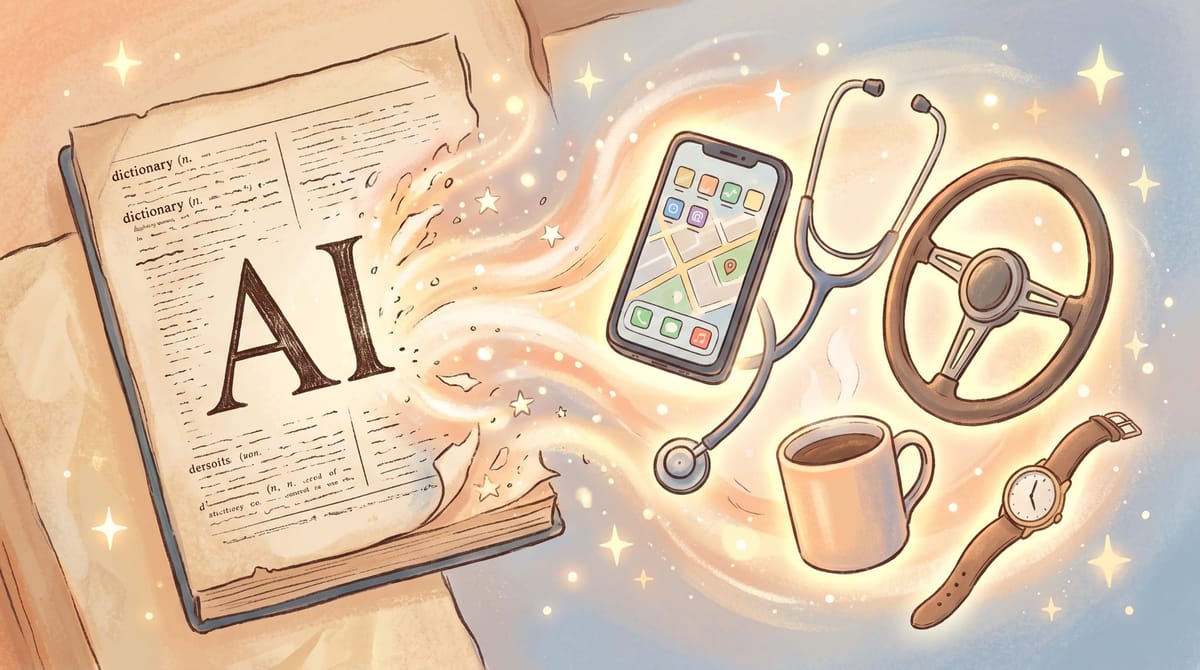
Artificial intelligence sounds threatening, but you already trust AI to protect your home, track your health, and answer your questions. The problem isn't the technology. It's the terrible name we gave it.
Artificial intelligence. Just reading those words probably made you tense up a little. Maybe you pictured a robot taking your job. Or a cold machine making decisions about your life. That reaction? It's not your fault. It's a branding disaster.
You already use AI every single day. Your phone unlocks when it sees your face. Your thermostat learns when you wake up and adjusts the temperature before you get out of bed. Your watch buzzes when your heart rhythm looks weird. You trust these tools with your safety, your comfort, your health.
The problem isn't the technology. The problem is that back in 1956, some researchers at Dartmouth College gave it the worst possible name.
Why 'Artificial' Makes Us Panic
We hate the word artificial. We pay extra for natural sweeteners. We cringe at artificial flavoring. We complain when conversations feel artificial. The word means fake, not real, less than.
Now pair that loaded word with "intelligence." Suddenly it's not just fake - it's fake thinking. It sounds like something trying to replace what makes us human. When you hear "artificial intelligence," your brain hears "competitor." It hears "threat."
That 1956 name was technically accurate. Those researchers wanted to see if machines could mimic human problem-solving. But as a brand? Total disaster. It frames AI as something working against us instead of for us.
This isn't about the technology being dangerous. This is about a name so bad that people reject tools they desperately need. The fear isn't rational. It's linguistic.
AI Is Already Your Safety Net (You Just Don't Call It That)
Here's what AI actually looks like in real life. A few years ago, my father fell in his Florida home. He couldn't get up. He couldn't reach his phone. But his smart home system detected something was wrong. It reached out to me instantly. I called for help. He was OK.
In that moment, I didn't think about artificial intelligence. I thought about a tireless tool that was paying attention when I couldn't be there. That's what this technology actually does.
Your smart thermostat? It watches when you're home, when you're asleep, when you crank up the heat. It builds a schedule around your life. That's machine learning. You just call it "my thermostat remembering what I like."
Your doorbell camera doesn't just record break-ins anymore. It spots someone suspicious on your porch and speaks up before they even try the door. It never gets tired. It never looks away. That's computer vision and pattern recognition. You call it "my security system."
Your Apple Watch tracks your heart rate while you sleep. Sometimes it catches irregular rhythms that doctors wouldn't spot for months. That's predictive health monitoring. You call it "my watch looking out for me."
You already trust AI with your safety. You just don't call it that.
The Real Superpower: Eliminating 'I Don't Know How'
The biggest killer of human creativity isn't lack of ideas. It's the voice in your head that says "I don't know how to do that" before you even start. That voice stops more projects than failure ever could.
AI can remove that voice. It can let you get started even if you don’t know how, or where your idea will take you.
You want to build a website but don't know code? AI writes it. You have an idea for a story but freeze at the blank page? AI helps you start. You need to analyze data but never learned statistics? AI runs the numbers. I know for sure this works, because I wanted to build a Mac app and went on a journey of discovery I could never have planned, resulting in an application that does more than I originally intended. Try it yourself for free and see what I mean.
AI is not replacing your thinking. It's handling the process so you can focus on creation. You bring the ideas. You make the decisions. AI handles the "how."
This is a power drill for your brain. When you need to drive a screw into dense wood, you don't use a manual screwdriver and complain about artificial muscle. You grab a drill because it amplifies what your arm can do without replacing it. AI is the same thing for your mind. And remember, you imagined and then built the project, not AI.
AI doesn't make you less creative. It makes you more creative by removing the barriers that stopped you from starting.
The technology isn't artificial. Your fear is.
What We Should Have Called It
If those Dartmouth researchers had called it "Amplified Creativity" or "Augmented Intelligence" back in 1956, we'd be years ahead right now. The technology would be exactly the same. But the fear? Gone.
Names shape how we think. "Artificial" makes us defensive. "Amplified" makes us curious. One word turns a partner into a threat.
This matters because the fear is holding us back from solving massive problems. Climate change needs better models and faster solutions. Healthcare needs tools that spot diseases earlier. Education needs systems that adapt to how each kid learns. We have the technology to tackle all of this. But people reject it because the name makes them think it's trying to replace them.
The cost of bad branding is measured in missed breakthroughs.
Stop Letting a Word Scare You
A 70-year-old naming mistake is keeping you from using the best tool humanity has invented.
The technology isn't artificial. Your fear is.
Your thermostat already uses machine learning. Your phone already uses natural language processing. Your watch already uses predictive algorithms. You trust all of them. You just don't call them AI.
So stop letting the name get in the way. Start thinking of these tools as amplifiers, not replacements. As partners that handle the process so you can focus on the ideas. As mechanical advantages for your brain. A rocketship for your mind.
Because here's the truth: AI isn't coming to take over. It's already here, quietly making your life better. The only thing holding you back from using it even more effectively is a label that never fit in the first place.
Steve Chazin makes AI make sense. After three decades leading tech teams at companies like Apple and Salesforce, he's on a mission to show regular people how to use AI without fear or confusion. Welcome to the Digital RenAIssance and #AIForTheRestofUs
