AI Might Be the Best Thing That Ever Happened to Truth (Part 2)
Last week, I wrote about Carl Sagan's 1995 warning and how we stopped doing the homework. Here's why AI, the thing everyone thinks will make things worse, might help us find a way out.


The Obvious Problem (and Why We Can Work With It)
I got some feedback on Part 1, where I suggested that AI might have arrived at just the right time for humans to understand truth. I know what you're thinking. AI is trained on biased human data. It can hallucinate. It can be confidently, completely wrong.
All of that is true.
But none of our other sources is infallible either. Cable news has its biases. So does your Facebook feed. That fact your uncle shared might be wrong. The expert on TV might have a book to sell.
We already live in a world of unreliable sources. We've just gotten comfortable with our preferred flavor of unreliable.
The opportunity with AI is to engage with the answer instead of just accepting it. Because you know AI might be wrong, you have a real reason to check. You can ask follow-up questions. You can say "wait, is that really true?" and dig deeper.
That's different from how we often use traditional sources. When CNN or Fox tells us something, it's tempting to trust it because it sounds so legit, or we can simply dismiss it if it doesn't match what we believe. Either way, we're picking sides instead of doing what humans do best: thinking.
AI can surely pull us into that same trap. It might reflect biases in its training and it will often tell us what we want to hear. But we can ask another AI to challenge our assumptions instead of reinforcing them. We still get to use our brains to judge any answer.
That skepticism, that habit of checking, that instinct to ask "how do you know that?" is exactly what Sagan said we were losing. Used properly, AI might help us get it back.
You want to know if any answer is real? Do your homework. Open the sources it gives you and check that they actually support the claim. Cross-reference with an independent source.
Doing your own homework is now easier than accepting someone else's 'truth'
- Steve Chazin
Everything Becomes Possible When Learning Gets Easier
Right now, if you genuinely want to understand why someone believes what they believe, it requires a lot of work.
You have to find their sources. Read their articles. Sit through their podcasts. Watch their news channels. Spend hours in a world that feels hostile and alien, where every sentence makes you want to argue, where you're constantly resisting instead of listening.
Most people won't do it. It's too hard. It's too uncomfortable. It's easier to just decide they're wrong or evil or brainwashed and move on.
AI can lower that barrier, because now we all have a tool that can make doing that homework easier than making excuses. Imagine a world where "I don't understand why they believe that" becomes a question you can start answering instead of an excuse to stop listening.
Imagine curiosity becoming cheaper than ignorance.
Our ancestors debated everything so they could understand more about the world they couldn't know from their own local experiences. Now it's possible (and much easier) to explore what other people know, and ask better questions about it.
The Choice We're Making Right Now
AI can be another way to stay in our bubble, another tool that makes us more isolated and more certain and more wrong. We can use AI to generate arguments that confirm what we already think. We can use it to find data that supports our side and ignore everything else. We can use it the same way we use cable news and social media, as a mirror that reflects back what we want to see.
If we use AI to confirm what we already think, nothing changes. But if we use it to actually learn, to engage with uncomfortable ideas, to do the homework instead of quoting someone else's conclusion, everything changes.
This is a great time to learn, listen, and understand where other people are coming from. Not because people suddenly got more curious or more humble or more open-minded. Because the tools to satisfy that curiosity are easier to reach. Because doing the homework takes less effort than it used to.
That doesn't make ignorance disappear. Time, access, and judgment still matter. But now a question can become the start of learning instead of the end of an argument.
Why I Created WitSquad
I've spent years thinking about what brings people together. Last month, I finally built something that might actually work.
It's called WitSquad.com, and it's trivia for groups. You pull it up on the big screen, everyone shouts out answers, and for 20 minutes, nobody's silently staring at their phone. They're looking up. They're laughing.
Here's the thing: it's hard to have a useful argument when we can't even agree on the facts. We need places where checking an answer together feels normal again.
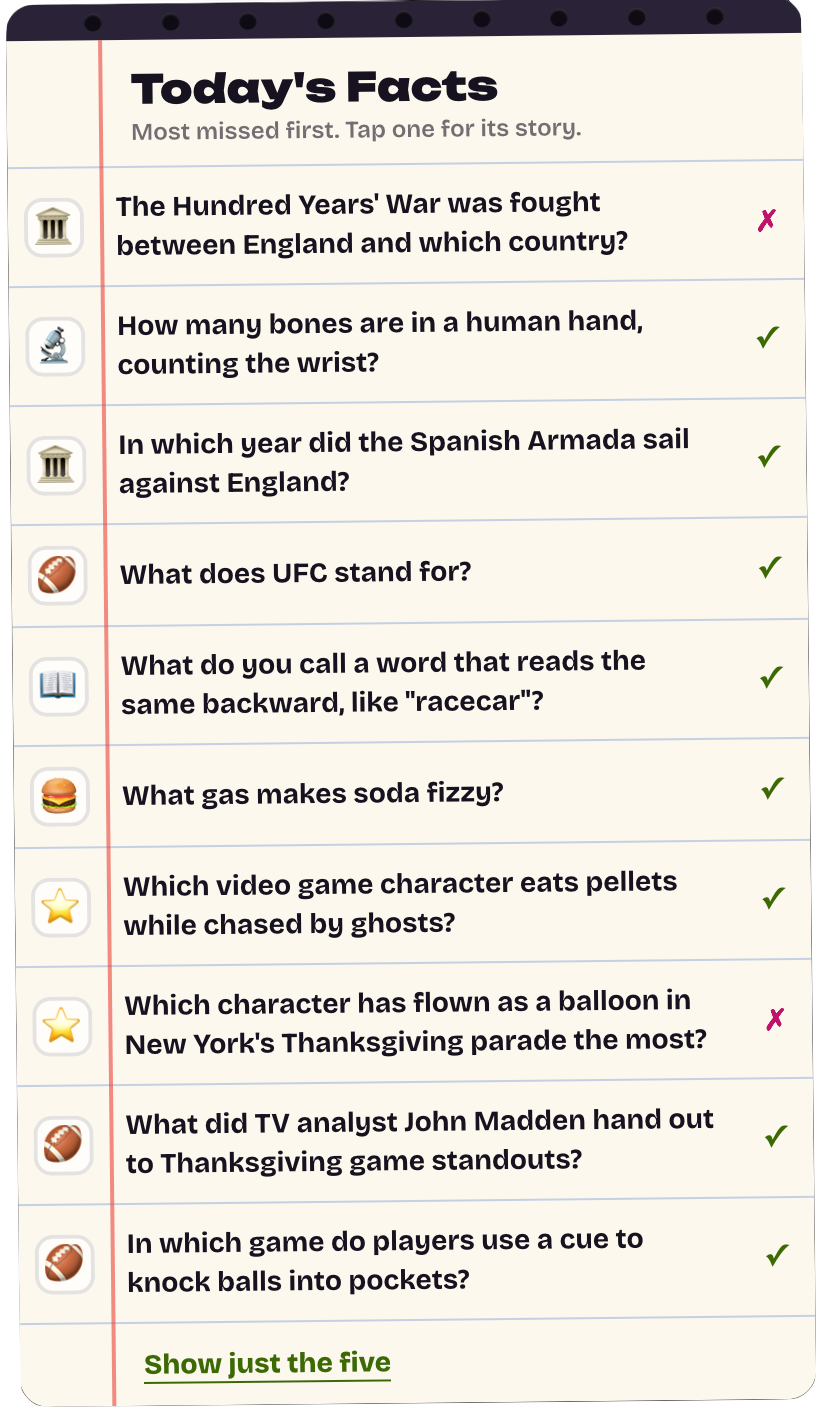
Trivia is a low-stakes way back. No political debate required. Just "what year did that happen?" and "who said that quote?" and "wait, is that actually true?" Then someone looks it up, everyone learns something, and for a moment, we're all working from the same facts.
You can play it for free with your family this Thanksgiving. Pull it up after dinner. Give everyone a reason to look up from their feeds and at each other. Remind yourselves what it feels like to share the same facts, even if it's just about movies and history and random weird trivia.
It's a small thing. But maybe small things are how we start remembering what's real and reconnect with what it means to be human and with each other.
What question could you ask this Thanksgiving that starts a conversation instead of ending one?
About the Author
Steve Chazin talks about tech from a hopeful and uplifting perspective. After three decades leading tech teams at companies like Apple and Salesforce, he's on a mission to show regular people how to use AI without fear or confusion. Welcome to AI For the Rest of Us.
P.S. Even if you're not able to be together with your family this Thanksgiving, you can still play with them remotely at https://witsquad.com/remote, or against a group of bots every day at https://witsquad.com/daily.
