AI Is Making Room for the Human Part
We've spent so much time asking what AI will take from us that we've barely asked what it could make possible. What would you do with more room to be human?

Nobody wakes up and wonders if electricity was a good idea. You flip the switch. The lights come on. End of debate.
The electricity question got settled decades ago, somewhere between your grandmother's first refrigerator and your phone charger. Electricity just became part of how things work. It powers your coffee maker, your hospital, your kid's school. Nobody writes op-eds asking whether we should have let it into our homes.
AI is our new light source, and the same shift may be happening right now. Yet, because it's so new, a lot of people have decided AI is the enemy: the job thief, the isolation machine, the replacement of the human brain. It's not, and the best map I know for this moment is about 200 years old.
The Industrial Revolution didn't make human muscle irrelevant. It multiplied what we could accomplish. We augmented our strength through horses, oxen, water wheels, and windmills, then steam and electric engines, which eventually changed the scale of everything we could accomplish. A person with a machine could now lift tons, build skyscrapers, and cross continents.
Did that newfound power come free? Not even close. The early industrial era had brutal chapters: dangerous factories, displaced workers, and decades before the gains reached ordinary people. But the direction was real. Machines pushed past the limits of the human body, and people ended up capable of things that were previously impossible. Your life today is made easier thanks to those inventions.
My bet is that AI will do something similar for our minds: amplify them, not replace them. And that changes everything about what becomes possible for the human race.
Genius and Access Used to Be Rare
Throughout much of our history, progress often depended on an accidental biological lottery paired with access. Every once in a while, someone was born with an exceptional brain at a convenient location: Einstein. Newton. Michelangelo. People whose mental capability was just fundamentally different from everyone else's and who had the time and place to think different. Those handful of people moved the entire human race forward.
If you didn't possess a special brain, or you couldn't afford the training, the tools, or the time, your best ideas stayed locked in your head, useless to you and every other human on Earth.
If you were lucky enough to gain access to a textbook written for experts and you weren't yet one, that door remained closed. Maybe you were great at math but couldn't visualize in three dimensions. Maybe you could write beautifully but numbers made no sense. Maybe you had ideas but lacked the technical skill to build them. Maybe you didn't know someone who could help you over the early struggle so you shut yourself down.
Super Intelligence (SI) may be the better way to describe it because it puts genius-level capability in everyone's pocket. Not to replace your thinking. To augment it the same way machines augmented muscle. You want to write, but grammar ties you in knots? SI handles the structure so you can focus on what you're actually trying to say. You have an idea for something visual, but you can't draw? SI helps you show people what's in your head. You're trying to understand a complex topic, but every explanation is written for experts? SI translates it into smaller parts that make sense to you.
For the first time in human history, you can create and share and inspire without mastering the tools (or winning the biological brain lottery) that used to be required just to get started.
The Impossible is Possible Now
Back in May, while my granddaughter Ellie was down for her naps, I built a teleprompter app called Tellie in three days using Claude AI, because I wanted to record videos without looking down at my notes. Soon after, a theater director in Germany using Tellie emailed me an idea he'd carried around for years, and AI helped me build that too.
I could never have invented Jens' feature, and he could never have built it. Yet it shipped this month as Nudge. Two strangers, an ocean apart, no shared language, and something exists now that neither of us could have created alone, thanks to AI.
This month I shipped WitSquad, a fun, free trivia game I dreamed up twenty years ago and shelved, thinking I could never afford to build it. Then after a strange train ride home from Philly, I figured out how to use AI to make it in 48 hours. It simply required a different type of machine to finally carry the part I couldn't.
Here's what AI didn't supply: the reasons. Nobody needed an algorithm to notice that a bar full of people staring at their phones is a waste of a Friday night. Nobody needed one to care about Mike alone in a hospital bed.

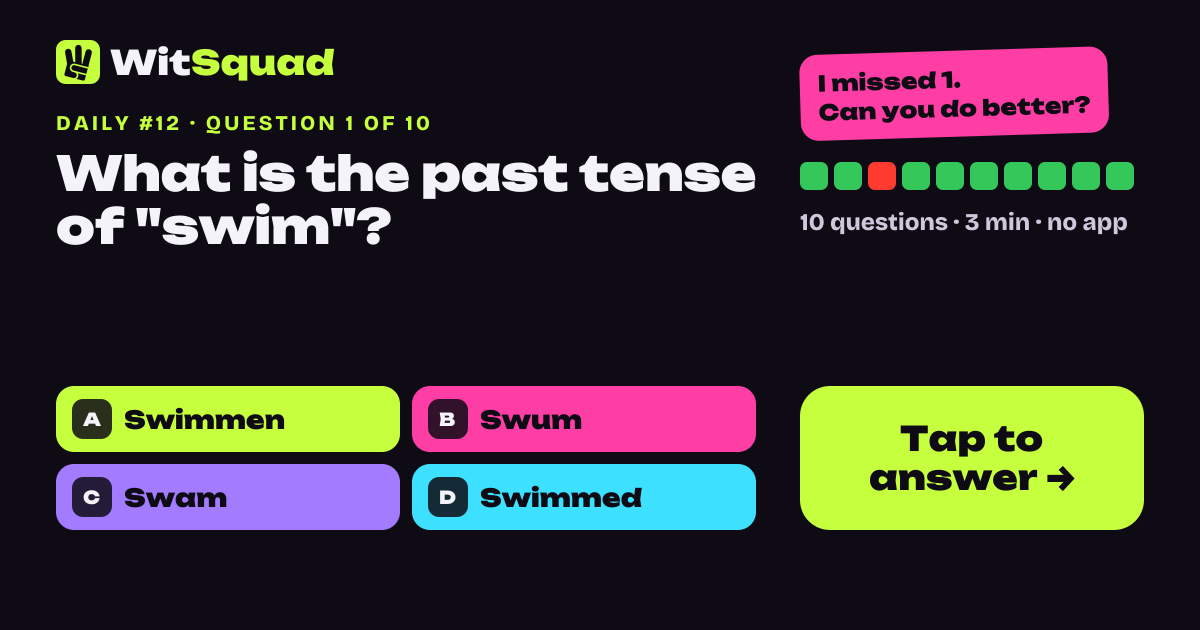
Play WitSquad for Free! No app, no account, no tracking
AI Does Not Decide. We Do.
But what about the headlines? The researchers signing open letters. The CEOs calling for slowdowns. The warnings that this time the monster is real.
The technology doesn't choose what it's for. We choose. We can point AI at isolation or at connection, at replacing people or at unlocking them. Researchers, CEOs, regulators, and the rest of us all get a say. That's not a reason to panic. That's the job.
I can't promise how this all turns out. But I've watched enough technology waves to know which side I want to be on: the side that treats a powerful new tool as something to learn, shape, and point at things worth building.
The Industrial Revolution gave us machines to amplify our muscles, and we built the modern world with that strength. AI gives us tools to amplify our minds. And when you expand what more people can do, you don't get less humanity. You get more people able to participate in what makes us human. Creating things. Connecting across differences. Solving problems that matter. The artist who couldn't afford years of technical training can now show people what's in her head. The parent working two jobs can help their kid with homework in a subject they never understood themselves.
AI is Our New Moon Shot
Watching humans walk on the Moon was arguably the defining moment in the shared humanity of the entire planet, regardless of race, religion or country. The Industrial Revolution birthed the televisions, rockets and computers which managed to connect all humans to each other and to the stars. We now regard those tools and feats as minor miracles in the evolution of our species, and I believe we'll feel the same about AI someday.
AI won't make us less human. Every time it breaks down a barrier, every time it hands someone a capability they couldn't reach before, it makes us more human.
What idea have you been carrying around because you thought you couldn't build it?
About the Author
Steve Chazin talks about tech from a hopeful and uplifting perspective. After three decades leading tech teams at companies like Apple and Salesforce, he's on a mission to show regular people how to use AI without fear or confusion. Welcome to AI For the Rest of Us.
Still Worried about AI? Start here:
- It already saves lives: retinas screened, hearts flagged, cancers caught earlier.
- Every generation feared its monster: electricity, cars, the internet. We adapted every time.
- It can bring us together: a 20-year idea, finally built with AI, that gets a room full of people to look up.
- It unlocks your ideas: not thinking for you. Removing the word no.
At the very least, have fun playing a simple trivia game made by a human + AI: