I Built a Mac App in 3 Days (And You Can Too)
A 30-year tech veteran with zero Mac coding experience built a working teleprompter app in 3 days using AI. Here's what vibe coding really looks like.

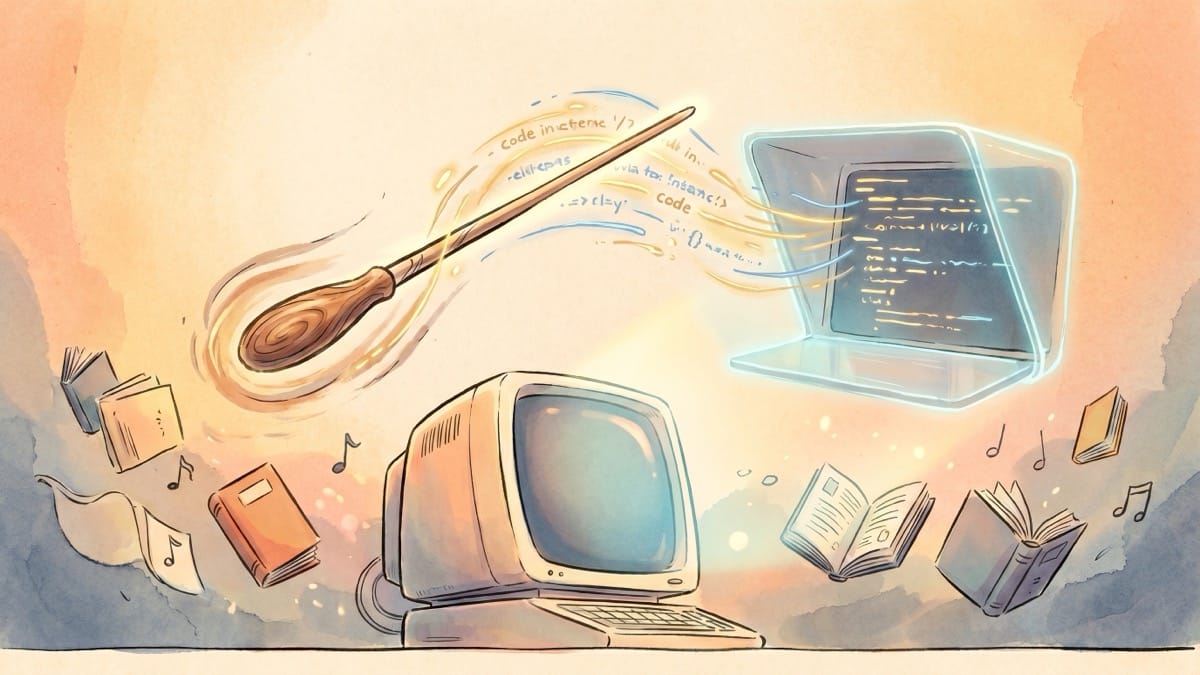
TL:DR I built a Mac teleprompter app called Tellie in three days, despite never learning to code one. AI didn't replace my judgment, it amplified it. The bottleneck for creating software used to be technical skill. Now it's imagination. That's the Digital RenAIssance, and it's open to everyone.
I Had a Very Ordinary Problem
People watch and share videos way more than they read newsletters like this one. So in order to become a trusted voice on AI, I need to make more videos.
That sounds simple until you actually sit down in front of a camera, press record, and suddenly forget every thoughtful idea you had in your head five minutes earlier.
If you have ever tried to record yourself, you know the feeling. You start naturally. Then you glance at notes. Then your eyes dart off screen. Then you restart because you sounded like you were reading from a hostage note.
I wanted something better.
Having done many live keynote presentations which takes hours of practice to get just right, I know that the moment I fumble for words, I lose my audience.
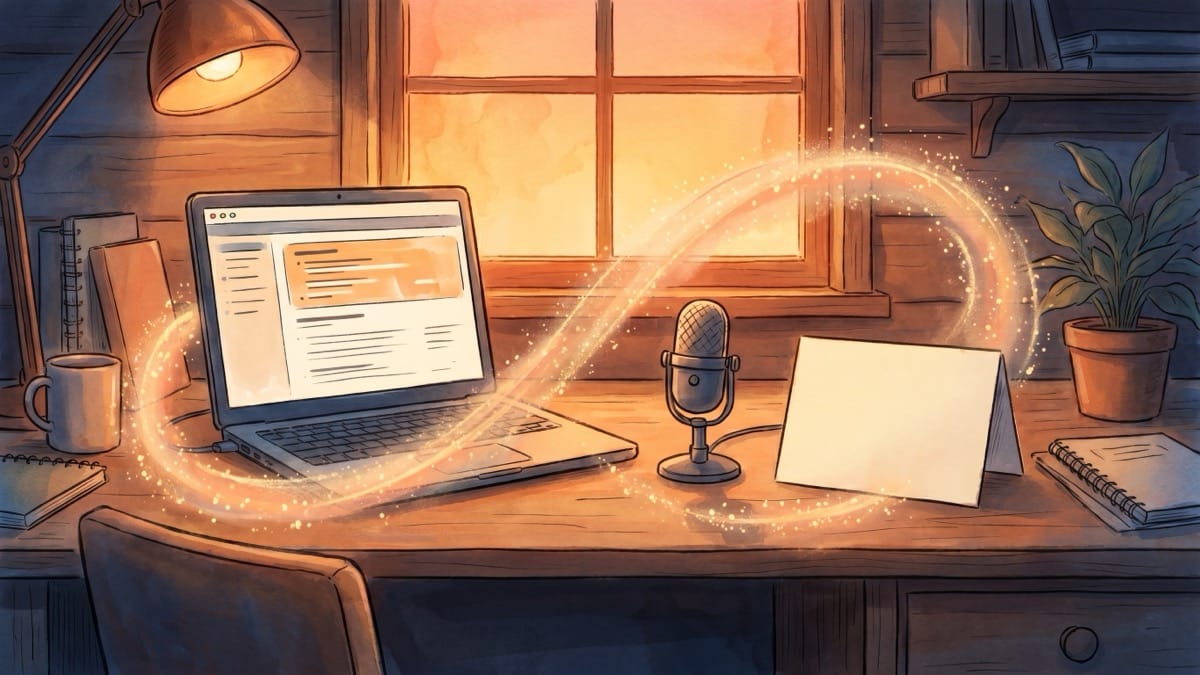
So I wanted a simple Mac teleprompter app that could let me speak naturally while recording videos for my newsletter, my YouTube channel, and social posts. I wanted the tool to feel lightweight, friendly, and made for the way I work. Not a giant studio tool. Not some complicated Hollywood setup. Just a helpful little app on my Mac that let me look straight into the camera and sound like myself.
So I built one.
In three days.
I call it Tellie.
You can download it for free and use it right now at https://tellieapp.com. (If you do, I'd love feedback!)
"I built Tellie for my own personal use in just three days, entirely by talking to an AI agent. I actually built the whole thing while visiting my granddaughter in Vermont, sneaking the work in while she was asleep or at school. Her name is Ellie, and she is just learning how to read. I named the app after her."
The Part That Still Amazes Me
I have spent more than 30 years in technology. I was personally rehired by Steve Jobs to help return Apple to profitability. I helped grow WebEx at Cisco to more than $1B in annual recurring revenue when the cloud was still new. I have launched startups, led large teams, acquired companies and built products used by millions of people.
And still, (despite my youngest son's perennial urgings) I never learned to code a Mac app.
For most of computing history, that would have been the end of my story. But AI changed the game for me, you, and anyone paying attention.
Imagine walking into a grand concert hall. You have this beautiful symphony playing in your head, but there is a catch. To hear it played out loud, you must learn how to play the violin, the cello, the oboe, and the timpani. You have to spend years mastering the mechanics of every single instrument before the music in your mind can become real.
For the past fifty years, creating software has worked pretty much like this. If you had an idea for an application, you had to learn the obscure syntax of programming languages, the nuances of servers, the ins and outs of security, and the various ways to market, distribute and support your product. You had to speak the machine's language. You needed access to the platforms that became gatekeepers to your ideas.
Since I could not code the thing myself, I had three choices: hire someone, wait for someone else to build it, or quietly file the idea away in my mental drawer where good ideas go to nap forever.
That drawer is very crowded.
But this time I tried something different. I described what I wanted to an AI agent. I explained the problem, the behavior, the rough shape of the app, and the experience I wanted as a user.
Then I kept talking.
Vibe Coding Is Not Magic. It Is Direction.
The phrase “vibe coding” can sound a little silly, like someone lighting incense over a laptop and hoping software appears.
That is not what happened.
Vibe coding is more like sitting beside a very fast, very literal craftsperson and saying, “Here is what I am trying to make. Here is what matters. Here is what is wrong with the last version. Try again.”
I started by telling the AI exactly what I needed. I wanted a window that floats on top of my other apps and extended out of the notch on my MacBook where the camera lives. I wanted text that scrolls smoothly. I wanted to be able to control the speed with my keyboard or onscreen buttons. The AI wrote the initial code. I tested it. Sometimes the text would jitter, or the window would hide behind another application. When that happened, I simply wrote a new prompt explaining the problem. We went back and forth like a homeowner and a building contractor.
You are not hammering every nail yourself. But you are also not walking away and hoping the thing becomes a house. You are guiding, correcting, inspecting, and deciding. You are still responsible for taste, judgment, and purpose.
And don't get me wrong. Things are not so easy that your idea just appears and works perfectly out of the gate. This took me three days (four if you count the cool website I also vibe coded to host Tellie) so it's not a "snap your fingers" magic tool (yet). Ping me if you want to know all the various steps it took to get to a proper Apple notarized 2MB Mac DMG.
In three days, AI helped me turn Tellie from an idea into a working Mac app. It helped create the interface. It helped troubleshoot bugs. It helped explain errors I did not understand. It helped me test changes, rethink choices, and keep moving when the old version of me would have hit a wall and said, “Well, I guess I do not know how to do that.”
That sentence is starting to disappear from my life.
Slowly. Then all at once.
We Have Seen This Pattern Before
When the printing press arrived, it did not make human thought less valuable. It made human thought easier to share. When the internet arrived, it did not make expertise irrelevant. It gave more people access to knowledge, audiences, and tools that used to belong only to institutions.
Generative AI is doing something similar, but closer to the act of creation itself.
For the first time, millions of people can move from “I wish this existed” to “I made a rough version of it” without needing permission from a company, a budget committee, or a technical co-founder.
Think back to the invention of the electronic spreadsheet in the late 1970s. Before VisiCalc and Excel existed, if a business wanted to run complex financial models, they had to hire specialized financial analysts. When spreadsheets arrived, accountants could suddenly build their own models without knowing how to write software. People panicked and thought the analysts might soon be out of work. Instead, the exact opposite happened. When the cost of asking questions dropped, businesses asked more questions. The demand for technology exploded. The spreadsheet did not replace human ingenuity. It amplified it.
That does not mean everyone will build great things. Most first drafts are messy. Most first products wobble. Tellie did too.
But the point is not instant perfection. The point is participation.
The Fear Is Real, But So Is the Opportunity
I understand why this moment feels unsettling.
If AI can help someone like me build a Mac app in three days, then what happens to software developers? What happens to designers? What happens to all the hard-won skills people spent years developing?
Those are fair questions. We should not wave them away with happy talk. Some of these jobs will change, some will be eliminated, and some new jobs will be created.
We are moving from a world of passive consumers to a world of active creators. If you notice a problem in your daily life, you no longer have to wait for a giant tech company to solve it for you. You can build the solution yourself. You can guide the AI to create custom tools for your business, your family, or your own personal projects. You do not need a computer science degree. You just need to know what you want. This is a profound shift in human potential. It is terrifying if you have been coasting. It is liberating if you actually love the craft.
Either way, AI did not make my judgment irrelevant. It made my judgment more important.
I still had to know what Tellie was for. I still had to decide when something felt too complicated. I still had to notice when the app behaved oddly, when the interface felt clumsy, or when a feature was technically possible but not actually useful. I still had to commit three days of my life to birthing this product.
Even more startling to me, the non-programmer: I sometimes had to push the AI to build what I thought was the killer feature (automatically scrolling the script by voice matching each word even if I scrubbed forward or backwards or decided to skip entire lines or change up words on the fly) because the AI thought it was impossible and that we should stop innovating. Its words: "Maybe we should ship what we have and call it a day."
I pushed it to keep going.
The AI accelerated our work. It did not supply taste or ambition. That is the human part.
If I Can Do This, So Can You
Tellie matters to me because I will use it. It solves a real problem in my everyday work. Using a tool I created myself feels better than using a product built for everyone.
But the bigger reason I wanted to tell you this story is that Tellie is not really about teleprompters.
It is about the moment we are living through.
Someone who is not a professional Mac developer at the end of his career can now build a Mac app. A parent can build a bedtime story tool. A teacher can build a classroom helper. A small business owner can build a custom dashboard. A retiree can build a family history app. A nurse can prototype a patient checklist. A neighborhood volunteer can build something useful for the people around them.
Not someday. Now.
Will it be perfect the first time? Of course not. Neither were the first websites, the first home videos, or the first desktop-published newsletters. But once regular people get access to creative tools, they do what regular people have always done.
They surprise us.
I sometimes had to push the AI to build what I thought was the killer feature...because the AI thought it was impossible and that we should stop innovating. Its words: "Maybe we should ship what we have and call it a day." I pushed it to keep going.
What Will You Make? The Digital RenAIssance is Here
This is what I call the Digital RenAIssance. For decades, the bottleneck to innovation was technical skill. Only a small fraction of the population had the training required to create software. Now, the bottleneck is simply imagination.
The old question was, “Do I know how to build this?” The new question is, “Can I describe clearly enough what I want to exist? That is a better question. A more human question.
Because underneath the code, the screens, the buttons, and the AI tools, Tellie began the same way every meaningful creation begins.
I had a problem. I imagined a solution. Then, for the first time, the machine met me more than halfway.
Welcome to the Digital RenAIssance.
What is one small thing you wish existed in your life, your work, or your family that you might finally be able to create?
P.S. Want to know what Claude thought about this? Check this out.
June 26, 2026 note: I wrote the above article in early May, 2026. Since then my story took on new meaning so I wanted to document the evolution of Tellie and vibe creating with AI, so please review these other stories that have spawned from this one product. Thank you!
 Steve Chazin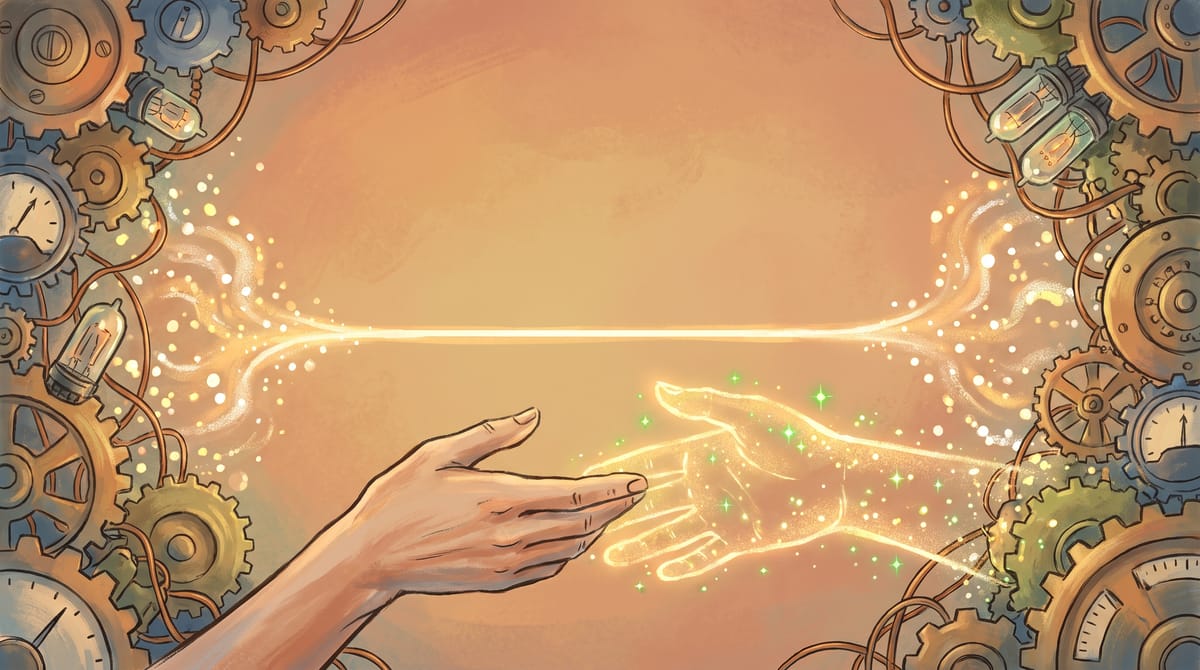
 Steve Chazin
 Steve Chazin
 Steve Chazin
 Steve Chazin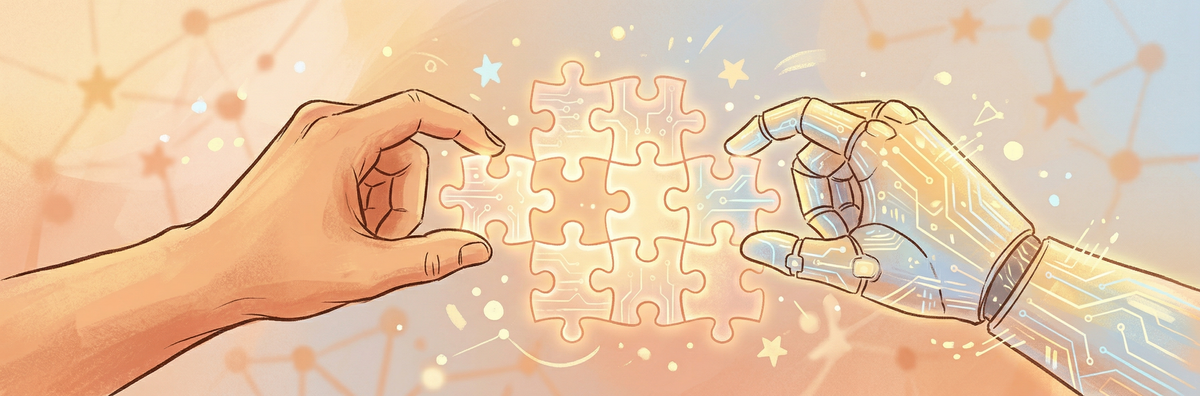
 Steve Chazin
Steve Chazin makes AI make sense. After three decades leading tech teams at companies like Apple and Salesforce, he's on a mission to show regular people how to use AI without fear or confusion. Welcome to the Digital RenAIssance. stevechazin.com