You Can't Outsource Taste to AI: The Messy Reality of Writing with AI
The future of writing is not replacement, but a messy, creative partnership.

TL;DR: The loudest critics of writing with AI imagine a machine typing out a finished essay while the human takes a nap. In reality, serious writers (like me!) are using these tools as tireless collaborators that require rigorous taste and judgment to guide.
The Overenthusiastic Sous-Chef
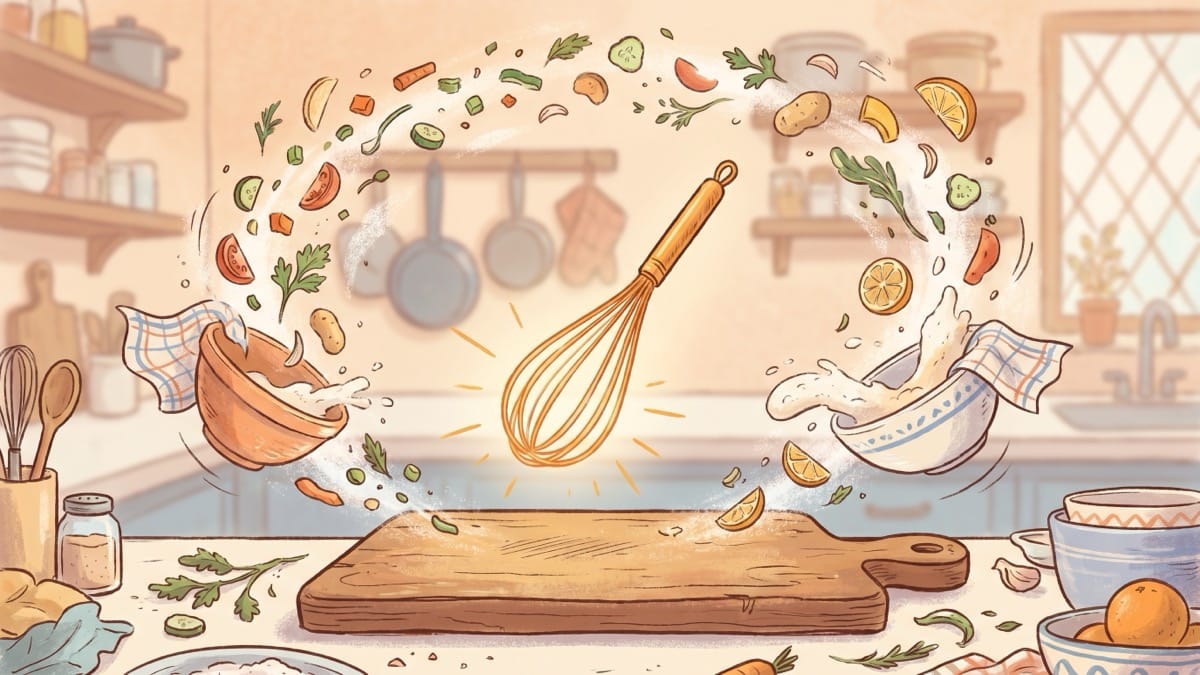
Writing with AI is like hiring an overenthusiastic sous-chef for your kitchen. If you give them a vague instruction, they will chop a hundred onions in ten seconds and leave you with a mountain of useless vegetables. They have boundless energy but zero context. To make a meal anyone actually wants to eat, you still have to be the head chef. You have to write the recipe, adjust the seasoning, and ultimately taste the soup. The machine provides the raw ingredients, but you provide the taste.
Recently, there has been a massive uproar on social media about writers using AI. When a prominent Washington Post columnist admitted to using AI in her workflow to help outline and brainstorm, the backlash was fierce. Critics called it dishonest. They argued that research is thinking, outlining is thinking, and writing is thinking. By their logic, any portion of that process done by a machine is simply less thinking done by the human.
Katie Parrott, a staff writer and AI editorial lead at Every, recently published a brilliant piece dismantling this exact fear. She pointed out that the critics are imagining the laziest possible version of generative AI at work. They picture a magic black box where a human types a basic prompt and out pops a Pulitzer-winning article. Even though the actual process of writing with AI happens behind closed doors, people fill the silence with their worst assumptions.
They are imagining the absolute worst possible version of the technology because, well, it's possible now. If you are the person who types "write an article about the future of business" into a prompt and publish whatever bland, soulless text comes spitting out, then yes, you are absolutely outsourcing your thinking. That's not writing, that's coasting.
The Panic in the Editing Room
This fear of technology replacing human creativity is entirely normal, and we have seen it before. Back in the early 2000s, I was a senior director at Avid. We were building digital video editing tools that completely changed how movies and television shows were made. I remember talking to veteran film editors who were initially terrified of this shift. hey were used to physically cutting film strips with razor blades and gluing them back together in the order that made sense for the overall story. When Avid introduced software that could splice clips with the click of a mouse, initially panic set in. They thought future software might someday automate their craft away.
But that is not what happened. The software could not tell a story. It could not feel the emotional weight of a dramatic scene, nor did it know exactly when to cut to a character's reaction to maximize the impact. While it initially just removed the friction of physically taping film together, it eventually gave editors a new ability to review multiple takes and camera angles of the same scene. Faced with more decisions, the editor's taste became more important, not less. Yet, because the tools made the mechanical part faster, the editor had more time to focus on the art.
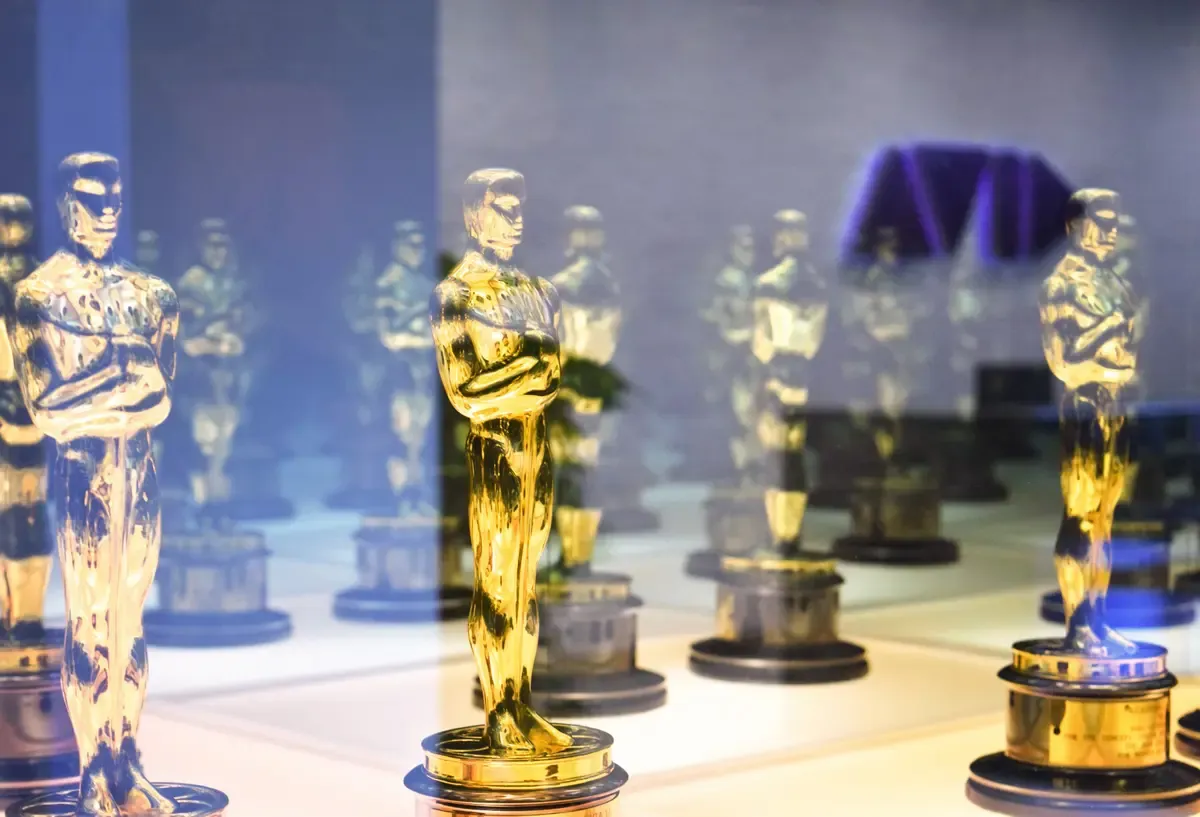
In 1998, Avid won an Oscar for that tool, Media Composer - used today to digitally edit almost every Hollywood motion picture. Editing is an art form as dozens of editors have won Academy Awards for their artistry telling stories. Just last week, Avid and Google announced the integration of Gemini inside Media Composer to "transform video editing from a mostly manual process into an intelligent, AI-assisted experience, significantly reducing the time required for media discovery and production."
The exact same shift is happening today with writers and the modern LLM. We confuse the physical act of typing with the cognitive act of creating. Just like the digital timeline did not replace the video or film editor, AI does not replace the writer (when used properly). It just changes the tools we use to shape our ideas.
The Messy Reality of Collaboration
Writing has never been a solitary, binary act of either total suffering or total automation. It is a messy process of drafting, revising, pacing the floor, leaning on editors, and borrowing structures. When you introduce an AI into that mix, it does not replace the thinking. It forces you to think differently.
As Parrott noted, serious writers are not letting the machine do the final writing. They are using it as a sparring partner to generate unstructured ideas, bounce around concepts, and break through the terror of the blank page. It takes immense rigor and judgment to look at a screen full of machine-generated text, realize it is completely wrong, and force it in a new direction. You have to be willing to tell the AI that its work is not good enough. You have to iterate.
She uses AI to conduct structured interviews with herself, drawing out what she's really thinking. She runs her drafts through critic panels that tear her arguments apart from different angles. She has AI-pattern detectors to flag when she's leaning on clichés. A line editor that tightens prose sentence by sentence.
Her workflow makes her more rigorous, not less. The AI doesn't replace her thinking. It stress-tests it. Forces her to clarify fuzzy ideas. Challenges lazy arguments. Identifies gaps in logic she'd otherwise miss. That's not to say everyone is so diligent. It is very easy to get lazy in the age of AI.
This requires a completely different mental muscle. Instead of starting from zero, you are starting from a rough, often flawed baseline. The AI might hallucinate a fact, use clunky phrasing, or completely miss the emotional tone you are aiming for. Your job as the writer is to catch those mistakes and course correct. You are no longer just chopping ingredients. You are the chef.
The Bottleneck is Taste
We are entering an era where generating words is essentially free. Anyone can ask an AI to write a blog post, a marketing email, or a bedtime story. But because generating words is easy, the value of those words will inevitably drop, and become bland and baseline. What becomes infinitely more valuable is the human perspective and thoughts behind them.
If you are a writer, a marketer, or just someone who sends long emails, this is actually incredibly liberating. You no longer have to stare at a blank page in fear. You get to be the head chef, guiding the process from start to finish. The bottleneck is no longer about getting words on a page. The bottleneck is your own taste.
This transition might feel terrifying if you have been coasting on your ability to simply type fast. But it is profoundly liberating if you actually love the craft of communication. You get to spend less time formatting sentences and more time refining your core ideas.
We are at the beginning of the biggest creative revolution since the printing press. AI is not the enemy. It is a tool. What matters is what we choose to build with it.
So here is my question for you. What story do you want to tell that you haven't told yet because you thought it was too hard to get started? How will you use these new collaborators to help you tell your story this week?
Steve Chazin makes AI make sense. After three decades leading tech teams at companies like Apple and Salesforce, he's on a mission to show regular people how to use AI without fear or confusion. Welcome to the Digital RenAIssance. stevechazin.com
P.S. here is a link to download Steve's Plain English AI Glossary. Enjoy!