Siri Finally Works And Nobody Cares
We asked for a sci-fi revolution. Apple gave us invisible wiring instead. Why Siri's quiet, boring update might actually be the most important AI moment of the year.

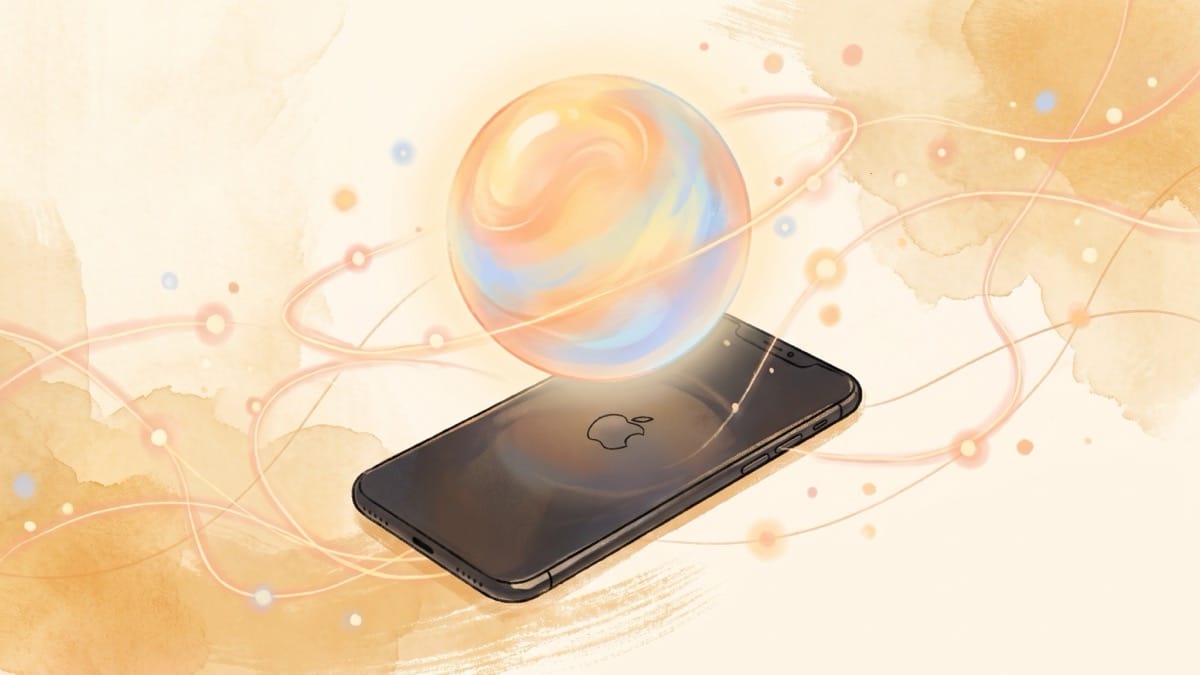
TL;DR: Siri finally works exactly as promised, yet almost no one is celebrating. We are treating the most powerful tool ever built like a simple light switch, completely missing the incredible magic of private artificial intelligence running locally in our pockets. Apple has a profound opportunity to democratize this new frontier for everyone just like they did with the original Mac, provided they choose reliability and courage.
Finally, Siri just works
Yet the public's response has been a collective shrug.
Maybe that's a good thing. Maybe we've crossed a threshold where "working as promised" stopped being impressive. When you flip a switch and turn on your lights, you don't throw a party. You just walk inside.
But here's what makes this moment strange to me. It's not a light switch. AI is the most powerful tool humans have ever built, and it barely registers on our phones. Worse yet, my conversation over vegetarian sushi with Steve Jobs in 1997 keeps coming back to me. I asked him why he started a computer company in the first place, and he said he wanted to democratize access to computing power (then locked inside expensive mainframe computer rooms) so it would be available to everyone. So why isn't Apple doing the same with Siri AI?

Note from Steve: This is my 30th article since I started writing about AI. If these stories help, I'd love to hear from you. While I really enjoy writing about AI, knowing that it helps people keeps me going. Thanks!
The Update Nobody is Celebrating
I've been using iOS 27 in beta for a month and I can assure you that Apple fixed what should have been fixed years ago. Siri now understands what you actually mean, not just what you technically said. It handles follow-up questions without losing the thread of the conversation. It can pull information from multiple apps and synthesize an answer without making you feel like you're debugging code.
This is real progress. The technical achievement is genuine. But compare the reaction to what happened when the first iPhone launched. People stood in line for hours. They filmed themselves unboxing a phone. The iPod put a thousand songs in your pocket, and that sentence alone rewired how we thought about music.
Siri's upgrade got a mention in the keynote and generally positive reviews. Then everyone moved on.
The muted response isn't a failure of marketing. It's a signal that we've moved past the honeymoon phase with AI. Getting the basics right is no longer breakthrough territory. It's just catching up.
When Tools Stop Feeling Like Toys
Technology follows a predictable arc. First it's magic. Then it's frustrating because it doesn't quite work. Then it fades into the background and becomes invisible utility.
Think about electricity. Nobody walks into a room, flips a switch, and marvels that photons are suddenly illuminating their space. You just expect the lights to turn on. That's the endpoint of successful technology. It becomes so reliable that you stop thinking about it. You trust it. And trust becomes the real product. In many ways, Apple's product promise has always been "It just works." This is why people stand in line to buy an Apple product they've never used before.
Siri is finally approaching that level of reliability. You can ask it to do something and reasonably expect it to work. That should be a win. And in one sense, it is.
But AI is different from light switches. AI has the potential to reshape how we think, work, and create. It's not just automation. It's augmentation. Treating it like wiring might mean we're missing the revolution entirely while we celebrate that the light finally stopped flickering.
The question is whether boring reliability is the right goal when we're still in the early innings of something that could change everything.
The iPhone Moment That Hasn't Happened Yet
Look back at the original Mac. Before it arrived, computers were for specialists. You had to learn command-line syntax. The idea that regular people would have one in their homes seemed absurd.
Then the Mac showed up with a graphical interface and a mouse, and suddenly your mom could use a computer. Nobody predicted how completely that would reshape work, education, and communication. The revolution snuck up on us.
The iPod did the same thing. Music was locked to physical media or clunky MP3 players meant for techies. Putting a thousand songs in your pocket sounded like science fiction. Then it became normal so fast that iTunes gift cards became the currency of an entire generation.
The iPhone was the biggest shift of all. Before 2007, phones were for calling people and maybe sending email if you had a fancy Blackberry. The idea that a pocket computer would replace cameras, maps, wallets, and become the primary way billions of people access the internet? Nobody saw that coming.
I think that we're in the awkward infancy period with AI right now. We can see the potential. It writes code. It generates images that would have taken professionals days to produce. It answers complex questions and synthesizes information across domains. But for many, it still feels like a party trick, not a life shift.
And Apple, the company that defined every one of those previous revolutions, is conspicuously silent.
For twenty years, Apple also set the pace on privacy and user experience. They made technology that felt human. They protected our data when everyone else was selling it. They showed us futures we didn't know we wanted.
Where are they now, when the stakes are highest? They're shipping an update that makes Siri less annoying. Is that leadership...or maintenance?
Maybe Apple is missing the moment while everyone else races ahead, and we'll look back on iOS 27 as the update where they chose comfort over courage.
The Stakes Are Higher Than a Better Siri
If Apple chooses boring reliability over transformative capability, what happens to The Rest of Us?
Other companies aren't sitting still. OpenAI, Google, Anthropic are racing toward frontier models that can do things we couldn't imagine five years ago. But those models live in the cloud. They cost money to run. They require you to send your data to someone else's servers and trust that it will be handled responsibly.
Apple could offer a different path. Powerful AI that runs locally on your device. Private by default. No subscription fees. No data leaving your pocket.
They have the chips to do it. The M-series processors are absurdly capable. They have the ecosystem. They have the trust. But do they have the vision?
I've been watching this play out in my own workflow. I bought the most powerful Mac I could afford, not because I needed it for video editing or 3D rendering, but because I wanted to run local language models. I don't want to depend on frontier AI that might become inaccessible or expensive or compromised. I want the capability on my machine, under my control. Or maybe I'm just harkening back to Steve's origin story for Apple.
That shouldn't be a niche power-user move. It should be the default option Apple offers everyone. But right now, I don't think it's on their roadmap. Shame if not, because this what my former boss meant when he said only Apple gives you "The power to be your best."
The real danger is that Apple waits too long, and the choice gets made for them. If people get used to relying on cloud-based AI because that's where the capability lives, Apple's privacy advantage stops mattering. You can't win on privacy if you're not competitive on capability.
We Need Both: The Boring and the Breakthrough
Siri should work reliably for everyday tasks without requiring our attention. Set a timer. Send a message. Check the weather. That's table stakes. If those basics don't work, nothing else matters.
But Apple should also be pushing the boundary of what AI can do on-device. Not just understanding requests, but anticipating needs. Not just answering questions, but enabling new kinds of creative work. Not just protecting our privacy, but unlocking new capabilities because our data stays local and secure. Not just working on our phones, but across all our devices leveraging all the power wherever it lives.
We're still early in the game. Nobody could imagine how the Mac would change work, or how the iPod would change music, or how the iPhone would change everything. We're in that same moment with AI right now. The revolution is happening. We just don't know what shape it will take yet.
Is Siri's boring reliability the next revolution, or is it DOA?
The answer won't be clear for years. Maybe the truly transformative version of AI is the one that fades into the background so completely we stop noticing it. Maybe the revolution is already here, and we're just too close to see it.
Or maybe Apple is missing the moment while everyone else races ahead, and we'll look back on iOS 27 as the update where they chose comfort over courage.
The revolution is happening. The only question is whether Apple will lead it or watch from the sidelines while the future gets built somewhere else.
Here is a YouTube short related to this article. After I wrote this article, Holler created the script from the article, then I recorded the script using Tellie and OpenClaw created the video. AI is amazing!
Steve Chazin makes AI make sense. After three decades leading tech teams at companies like Apple and Salesforce, he's on a mission to show regular people how to use AI without fear or confusion. Welcome to the Digital RenAIssance and AI for the Rest of Us. stevechazin.com
