Is It Weird That I'm Proud of Something I Didn't Do
I dragged the icon to the Applications folder and felt... what exactly? Pride? Fraud? Both? I built a Mac app that people are downloading and using right now. And I didn't write a single line of code.

Is this feeling OK?
I launched Tellie last week. It's a Mac teleprompter app. Clean, simple, solves a real problem I had: recording videos without sounding like I'm reading from a hostage note while keeping my eyes on the camera. You can download it right now at tellieapp.com, and people are.
This feels good. It really does. Building a real Mac app is something I've dreamt about for a long time but could never do it on my own. But there's this other feeling sitting right next to the pride. This quiet voice asking: what exactly did I do here? I didn't write Swift. I didn't debug the scroll physics. I talked to an AI and it wrote the code. Am I allowed to be proud of that?
I've been in tech for 30 years. I was rehired by Steve Jobs to help bring Apple back to profitability. I helped grow WebEx at Cisco past a billion dollars in annual recurring revenue. I've launched startups, led teams, shipped products used by millions. And still, despite my youngest son's perennial urgings, I never learned to code a Mac app.
Until now. Sort of. And that "sort of" is the whole story.
The Old Gatekeeping
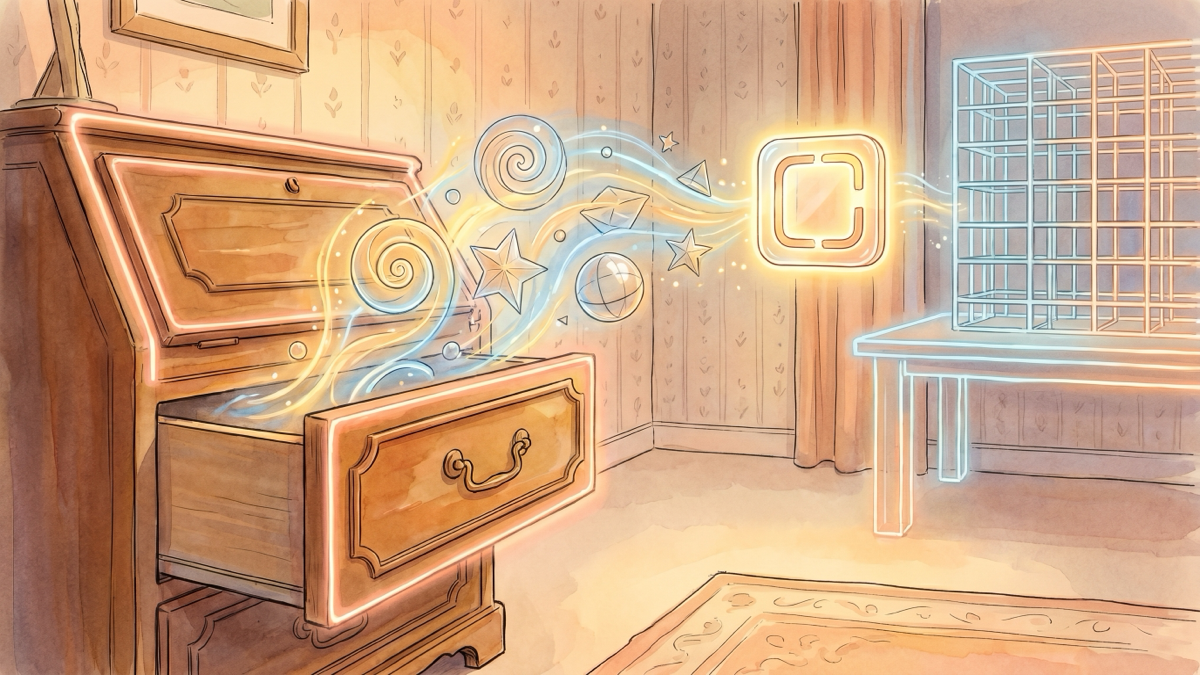
For three decades, I've carried around a mental drawer stuffed with ideas that never became real. Not because they were bad ideas. Because I couldn't build them myself, and the path to getting them built was too steep.
The traditional options looked like this: hire a developer (expensive, slow, requires managing someone), wait for someone else to build something similar (might never happen, and when it does, it's never quite right), or let the idea quietly die in that drawer where good ideas go to nap forever.
My drawer is very crowded.
Here's the thing about that drawer. Those ideas weren't competition for professional developers. They were just... lost. A homeowner who wants to build a specific kind of house doesn't become a contractor when they can't afford to hire one. They just never build the house. The idea stays a sketch on a napkin, filed away, forgotten.
This wasn't just a technical barrier. It was a creativity barrier that kept entire classes of people out of building. If you could picture something but couldn't code it, you were stuck. You had the vision but not the instrument. You had the melody in your head but no way to make it audible.
That's how software creation has worked for fifty years. You had to speak the machine's language first. Learn the syntax, the frameworks, the deployment pipelines, the security protocols. Master the instruments before you could play the song.
And if you couldn't? Your idea stayed in your head. Or in that drawer.
Or more relatable to product managers: translate what you can see so clearly in your head to words and pictures that help other people see it too. And, invariably, watch it get turned into something that looks different than what's in your imagination because a) you're not great at thinking through every edge case and/or b) everyone has their own ideas too. Congrats, you just shipped mid.
What Actually Happened With Tellie
I built Tellie in three days while visiting my granddaughter in Vermont. Her name is Ellie, and she's just learning how to read. I named the app after her. I worked on it while she was asleep or at school, sneaking in sessions between breakfast and storytime. You can read that entire origin story here.
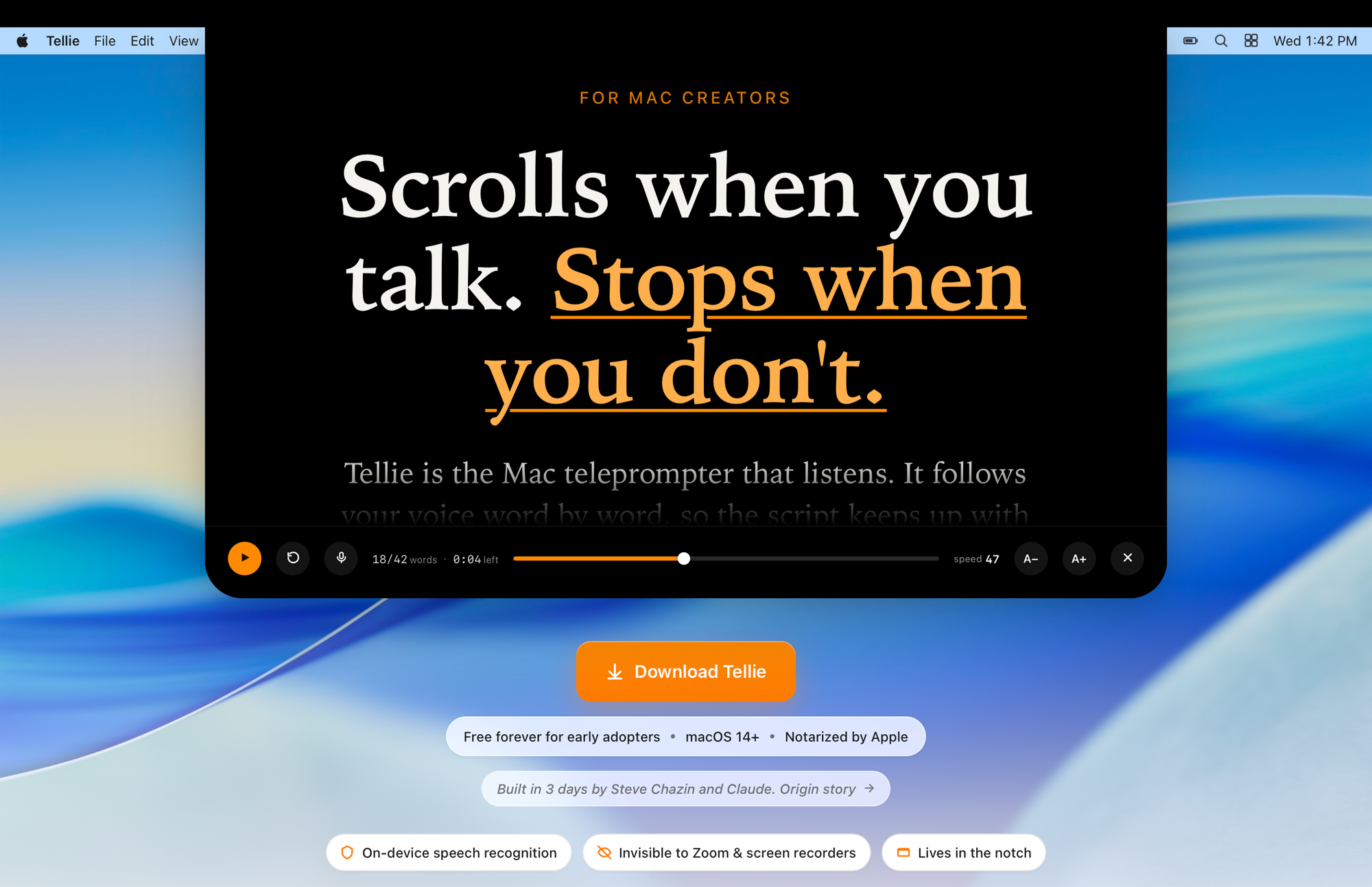
The result: a working app. People are downloading it. They're recording videos with it. It solves the problem I had, and apparently, the problem other people have too.
But should I be proud of that? I feel like I should (and I do) but that's the question that won't leave me alone.
The Voice That Says You're Cheating
Let me name the impostor syndrome directly, because it's loud. Real developers will look at this and see it as unearned. You didn't pay your dues. You didn't learn the craft. You used a shortcut, and shortcuts are cheating.
There's also the bigger fear. The one that feels more serious. That I'm contributing to job displacement. That AI is taking people's livelihoods, and here I am celebrating my ability to skip past hiring a developer. Am I part of the problem?
I've sat with that concern. It's legitimate. But here's what I keep coming back to: the ideas in my mental drawer were never going to become jobs for developers. I wasn't choosing between "hire a developer" and "use AI." I was choosing between "use AI" and "let my idea die."
That drawer wasn't a pipeline of potential contracts. It was a graveyard.
The economics never made sense. Hiring a developer for a personal project app? For something I wanted to exist but had no business model for? For an idea I wasn't even sure would work? That math doesn't close. So the idea just... sits there. Forever.
Tellie wasn't competing with a development job that would have existed. It was competing with nothing. With zero. With the silence of another idea that never escapes my head.
This isn't about replacing professional developers. It's about unlocking people who were never going to be in that market to begin with. People with ideas too small, too weird, too personal, or too uncertain to justify a budget. People like me, who've spent years knowing what good software feels like but lacking the specific skill to make it myself.
The question isn't whether this is taking work from developers. The question is whether we want more useful things to exist in the world.
And to be clear, I'm not alone in this new wave of creation. The App Store is seeing an explosion of AI-powered vibe-coded apps, nearly doubling new app submissions over last year, reversing a ten-year decline in app growth. The Verge also made it very real, with this post today. They say Welcome to the Personal Software revolution. As I've been saying, welcome to the Digital RenAIssance.
What Actually Matters in Creation
Here's what I need you to understand. The parts I did do? They're not trivial. They're not just cosmetic. They're the difference between software that works and software that people actually want to use.
Deciding where the read line should go. That's not decoration. It changes whether you can look natural on camera or whether your eyes visibly track the scrolling text. I tested five different positions before landing on the one that actually works. Then, after speaking with my son, added a feature to let you change it. And then resize the entire prompter window. Now I'm deciding if the window should undock from the notch. I need real users to help me decide on what to build next.
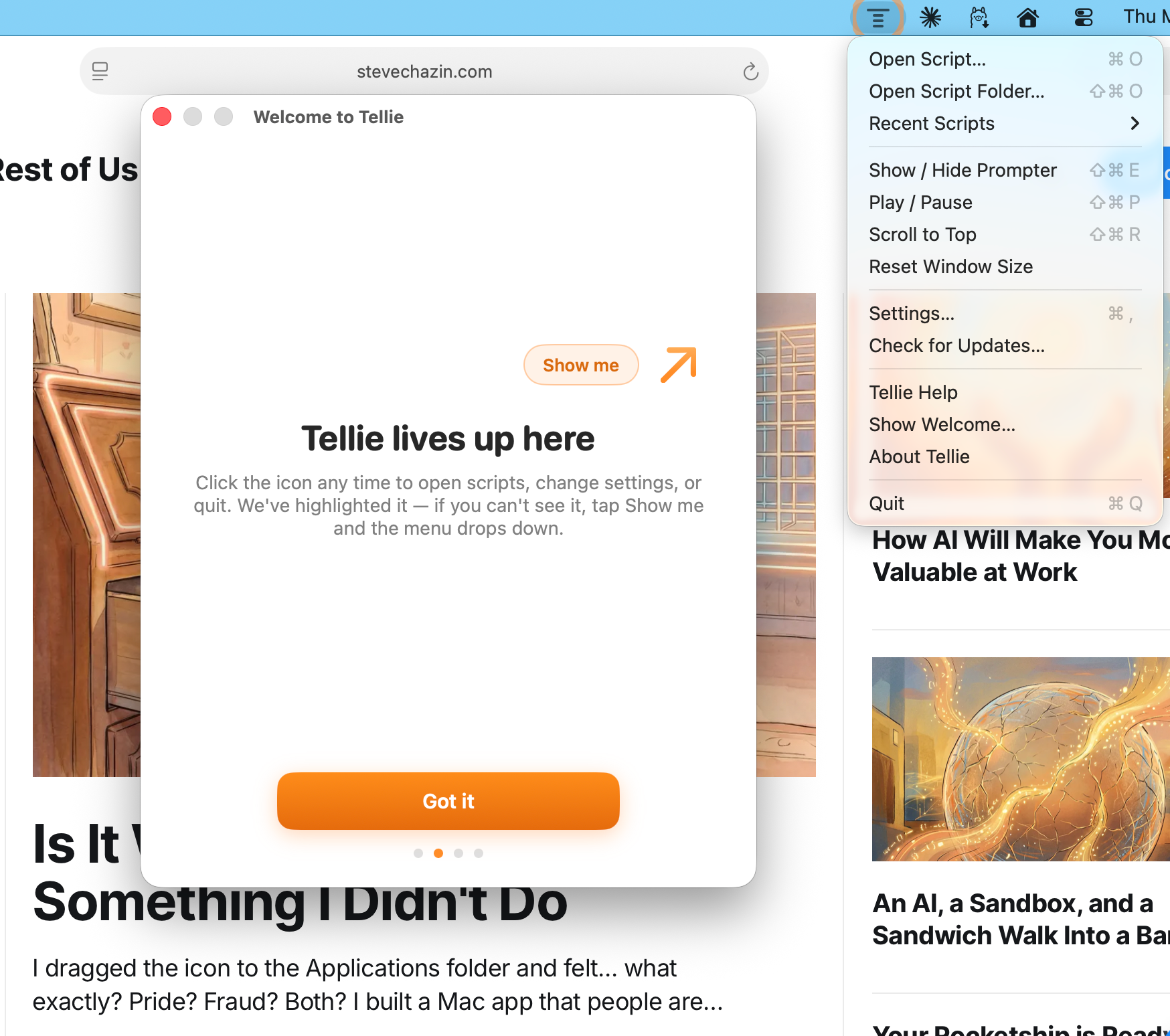
Deciding whether voice follow should be turned on via an onboarding wizard. That's not a checkbox. It's the difference between "wow, this thing reads my mind" and "why isn't this working? Oh, I have to turn something on first." That's 30 years of experience talking. I'm now proud of my onboarding widget and a cool feature I built to show the new user where Tellie's only menu lives in a crowded Mac menubar (try it!)
The icon. Claude generated icons that looked like nightmare creatures. Multiple sets of eyes. Asymmetrical shapes that your brain registers as subtly wrong. I hand-drew the final version because I've spent decades looking at what makes an icon feel friendly versus creepy. That knowledge didn't evaporate when AI entered the picture.
The landing page voice. The way I describe what Tellie does. The decision to give it away free instead of charging. The Tellie Help and Privacy and Press pages. The order and contents of Tellie's single menu. These aren't trivial. They're taste. They're judgment. They're years of shipping products and watching what makes people excited versus confused versus annoyed.
I know what good looks like. I know what shipped looks like. I know how to break things by using them, and I know how to describe what's broken in a way that leads to a fix.
Those skills didn't come from AI. They came from experience. From launching products that succeeded and products that failed. From user testing and customer conversations and watching metrics. From the accumulated pattern-matching that happens when you've been in the arena for three decades.
AI gave me the instrument. But I still had to play the song. And I had to know what the song was supposed to sound like in the first place.
Worried about losing your job to AI? Your experience matters even more now.
The Real Question: Does Something Useful Exist?
Let me reframe this entire question.
Tellie solves a real problem. I wanted to record videos without sounding like I'm reading from a hostage note. I wanted to look natural on camera while staying on script. I built a tool that does that. And because I was my own customer, I tested it relentlessly until it actually worked the way it needed to.
People are using it now. It's free (for now!). It helps them. That's not theoretical. That's not a side project gathering dust. It's a thing that exists in the world and makes certain tasks easier for the people who download it.
The creator of a chair doesn't need to have felled the tree, milled the lumber, or forged the screws. But they absolutely need to know what makes a chair comfortable. What height works for a dining table versus a desk. Where to place the lumbar support. How much weight the legs need to bear. Whether the seat should have a slight backward tilt.
That knowledge is real. That knowledge is what separates a chair people want to sit in from a chair that technically functions but nobody uses.
I brought something into existence that helps people. I applied judgment and taste and 30 years of experience to shape something useful. The fact that I didn't personally transform raw materials into finished product doesn't make the chair any less real.
That's what I'm proud of. Not the code. The product. The thing that exists and works and helps.
What This Unlocks for Everyone Else
How many people reading this have a mental drawer like mine? Full of ideas that could help people. Apps that solve annoying problems. Tools that make a specific workflow easier. Little utilities that don't exist because you never learned to code and hiring someone was too expensive or too complicated.
What if those ideas didn't have to die anymore?
The bottleneck for creating software used to be technical skill. You had to learn languages, frameworks, deployment, security, the entire stack. That barrier kept most people out. Not because they lacked good ideas. Because they lacked that specific, hard-to-acquire skillset.
Now the bottleneck is imagination and judgment. Can you picture what you want? Can you describe it clearly? Can you test it and recognize what's broken? Can you make the thousand small decisions that turn working code into something people actually want to use?
If yes, you can build things now. Real things. Things that ship. Things that help.
This isn't about replacing professional developers working on complex systems, enterprise software, or products that require deep technical architecture. Those jobs aren't going anywhere. If anything, they're becoming more valuable as the surface area of software expands.
This is about a whole new class of creators. People who were never going to hire a development team. People whose ideas were too small, too personal, or too uncertain to justify a budget. People who've been sitting on solutions to real problems but had no path to make them real.
That's what changes. Not the displacement of existing developers. The unlocking of latent creators who were always outside that economy.
The question isn't whether you deserve to be proud. The question is whether you're going to keep letting good ideas die in that drawer.
What's in your mental drawer?
What have you been telling yourself you can't build because you can't code?
I felt strange dragging that Tellie icon into my Applications folder. Pride mixed with doubt. The sense that I'd somehow cheated, that I'd taken a shortcut around something sacred. That I should feel guilty for not having earned this the hard way.
But you know what? Useful things existing in the world is better than useful things staying trapped in people's heads. And the skills that matter, the judgment and taste and relentless testing and decision-making that separate good software from bad software, those didn't get automated away. They just got a new instrument to play through.
That discomfort you feel when you think about building something this way? That's what creation feels like when the old rules no longer apply. Get comfortable with it. Because your ideas deserve to exist, even if you can't write the code yourself. And the tools are only going to get easier, so get started now.
Your idea drawer has been closed long enough. Time to open it.
Steve Chazin makes AI make sense. After three decades leading tech teams at companies like Apple and Salesforce, he's on a mission to show regular people how to use AI without fear or confusion. Welcome to #AIforTheRestofUs.