The Feature AI Couldn't Imagine
I woke up at 3am with a novel invention in my head. Not a better teleprompter. Something stranger: a teleprompter that knows what you didn't say.

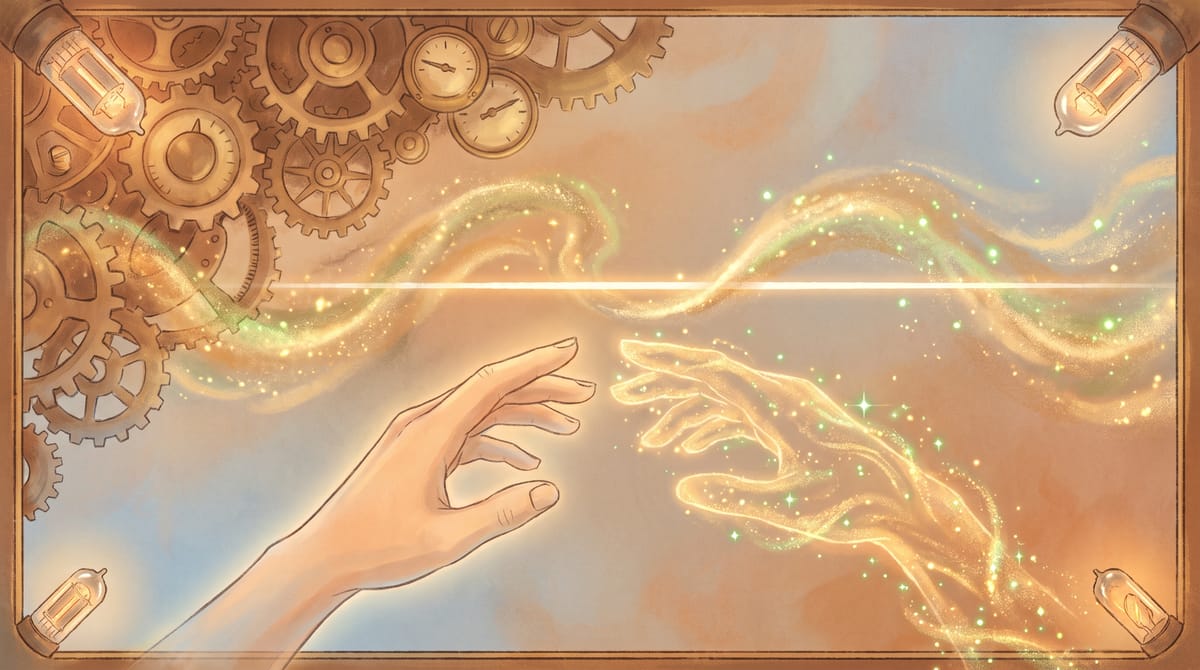
I jolted awake and stared at the ceiling. I knew my teleprompter app Tellie was becoming popular with people all over the world because many of them wrote to me asking for additional features. Each time I built a new feature and shipped it, (sometimes the same day they asked for it) it felt good to make a difference. But now I had an idea in my head that no one asked for. And it felt...magical.
I got up and dictated my idea using Voice Notes on my iPhone and went back to sleep. In the morning it still made sense, which almost never happens.
The problem nobody had named
Every teleprompter ever built answers exactly one question: where am I in the script?
Fixed-pace prompters guess at it. Better ones follow your voice and answer it precisely, word by word. Tellie has done that since May.
But that is not the question that ruins presentations, pitches or keynotes.
What actually costs you is finishing the recording, or walking off the stage, and realizing you never said the price. The callback to your opening. The one line you needed to say.
No teleprompter has ever helped with that, because no teleprompter knew what you owed the audience. It only knew what was on the page.
That was my dream: make Tellie know what you forgot to say so you nail every speech. I figured that since Tellie already listens as you talk in order to scroll the script word by word, there must be a way to have it help you know what you didn't say.
Then we tried to build it
This is the part I want to be straight about, because the story is usually told as though the idea arrives and the machine executes it.
That is not what happened. We were stuck for days.
The instinct, mine and Claude's both, was to build it as interface. If Tellie knows a section still needs covering, show that. Put a highlight on the heading. Add a marker in the margin. Draw a little indicator, a badge, a panel.
Every version failed, and they failed for reasons that only show up when you test on real hardware with a real script.
A mark on a heading is useless because as you speak, the heading scrolled off the screen seconds ago. A badge in the margin competes with the words. Anything floating over the reading surface pulls your eye away from the exact thing you are supposed to be reading while a camera is pointed at your face.
We kept building things that were technically correct and practically useless. The engine underneath worked. Every attempt to show you what it knew made the app worse.
The idea that unstuck it
I remember where I was standing when it landed. Buying a lemon at Wegmans.
Stop putting the power in the app. Put it in the script.
Don't add UI. Add a character. Let people mark the sections that matter, inside their own document, using the writing they already do. This is an idea that AI could never imagine, and it took a human (me) to literally dream it up.
How to make sure you cover what's important:
Just put two hashes and an exclamation point to indicate that you cannot leave without saying this section:
## ! This Section is Important
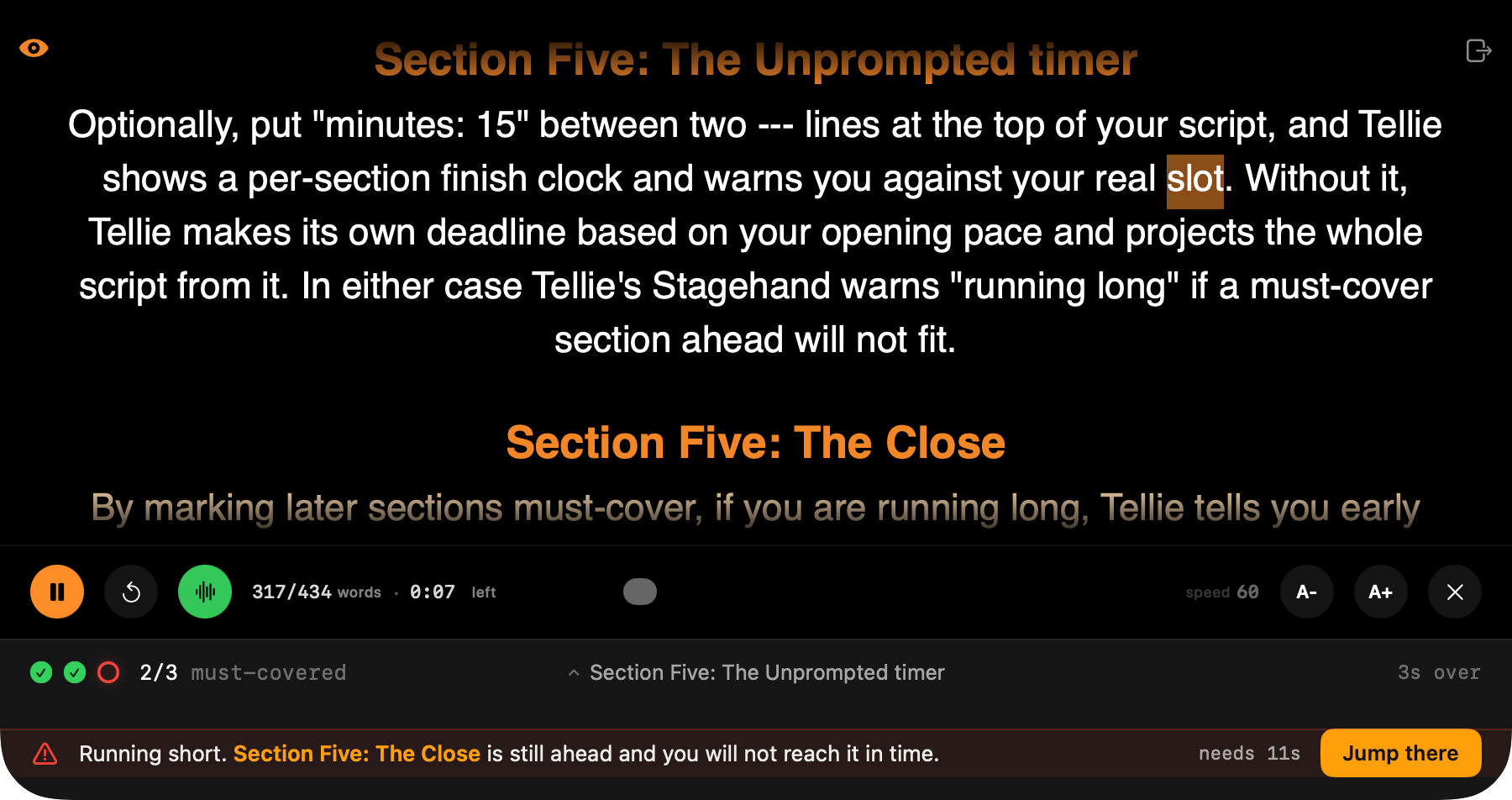
Anything you put below that marked header will be tracked by Tellie to make sure you cover it. When you do, you'll get an automatic checkmark - and if you are about to run out of time, Tellie gently nudges you to cover it.
How to make sure you say what you came to say:
I love to ad-lib and go off script - which is the opposite of what a teleprompter is built for. Tellie already patiently waits until I get back on script because it's actively listening to what I say and matching it to the words on the script. But what if I never come back to those written words?
So I imagined a way to have the best of both worlds: add a key phrase to a section so even if I ramble, all I need to do is say the phrase that matters. Just add a key mark and Tellie knows I said it, even if I improvise:
> key: One More Thing
How to make sure you don't run out of time:
Tellie constantly calculates your reading speed and gives you a timer based on how many words are left in your script. But what if your talk typically takes twenty minutes but the person before you ran long and now you only have eleven minutes? Put an optional line at the top of your script that means this is how long I have. Magically, Tellie will nudge you only if you might run out of time while you still have time to make it.
minutes: 11
That's the whole thing. No new buttons. No settings to learn. No panel to arrange. The script itself carries the intelligence, and Tellie reads it the way a stagehand reads a cue sheet.
And the feedback isn't a new interface. The words themselves warm from white to green as you cover them. Color is the mark. The only time anything new appears on screen is when Tellie gives you a nudge if it thinks you might not hit all your points in time:
Why I can't tell you what it is
Here's my marketing problem, and I'm oddly proud of it. (And open to your suggestions for how to market it!)
I don't know what to call this thing.
This isn't a teleprompter feature. Teleprompters scroll text. This tracks obligations. It watches what you actually said against what you promised yourself you would say, and it does that while you improvise, in your own words, in whatever order you like, while making sure you don't run out of time.
Watch who uses it and it gets stranger:
- An actor marks the beats they cannot drop and then plays the scene freely;
- A content creator has to work a sponsor read into a long episode and needs a nudge to make sure they cover it;
- A salesperson turns a discovery call into a checklist that listens, and never once looks down at notes;
- A teacher marks the three things the lesson must land, takes a tangent when a student asks something good, and gets told which point is still waiting;
- A manager has to have an important conversation and needs a checklist to make sure to cover each point and the exact words to use; and
- A conference speaker is told they now only have eighteen minutes instead of thirty and Tellie nudges them when the close starts slipping out of reach.
Same feature. Six jobs that have nothing to do with each other.
I wanted to call it an unprompter. The word is true twice. A teleprompter prompts you, and Tellie waits for you. And everything it does for you is help you never asked for. I liked it enough that I bought unprompter.com.
Nobody searches for unprompter. That's the trouble with inventing a category: you have to be big enough to teach the world a word first.
So the feature is called Stagehand, because that's what it behaves like. The person in the wings who knows the whole show, says nothing, and touches your elbow at the exact moment you need it. But the name describes the behavior, which is honest. It leaves the category question open. There isn't a category yet.
What I actually did
I've written before that code is cheap and judgment is dear. I believe it more now, but this one taught me something narrower and more useful.
Claude wrote every line of the matcher. The speech recognition, the word alignment, the arithmetic that projects your finish time from your actual speaking pace: all of it, and none of it is code I could have written.
I didn't contribute code. I contributed where the power should live.
And here's the part I keep turning over: that idea was not available to me at the start. I could not have had it on day one. It only arrived after days of us building the wrong thing together, watching it fail on my own Mac, and slowly learning the shape of the real problem. The insight was mine, but it was manufactured by the collaboration. It's that the two of us, working tirelessly yet failing, produced a new thing that neither could imagine at the start.
My invitation
I'm not telling you this so you'll download my app, although to celebrate the new 1.5 release, I made the first 10 days of Tellie Pro free and you're welcome to.
I'm telling you because the interesting part is not that AI wrote four thousand lines of Swift. It's that a person with no formal coding background could be inspired from a dream, chase it unsuccessfully for days with a machine, hit a wall neither could see past, and then have a breakthrough that made it work. I hope I'm just one of many people all over the world, who are inventing useful things with AI that humans would never have done on their own.
So: what's in your drawer?
Not the thing you'd build if you could code. The thing you'd build if all you had to bring was knowing what should exist. Or having a dream that wakes you up to the possibilities that now exist in the Digital RenAIssance.
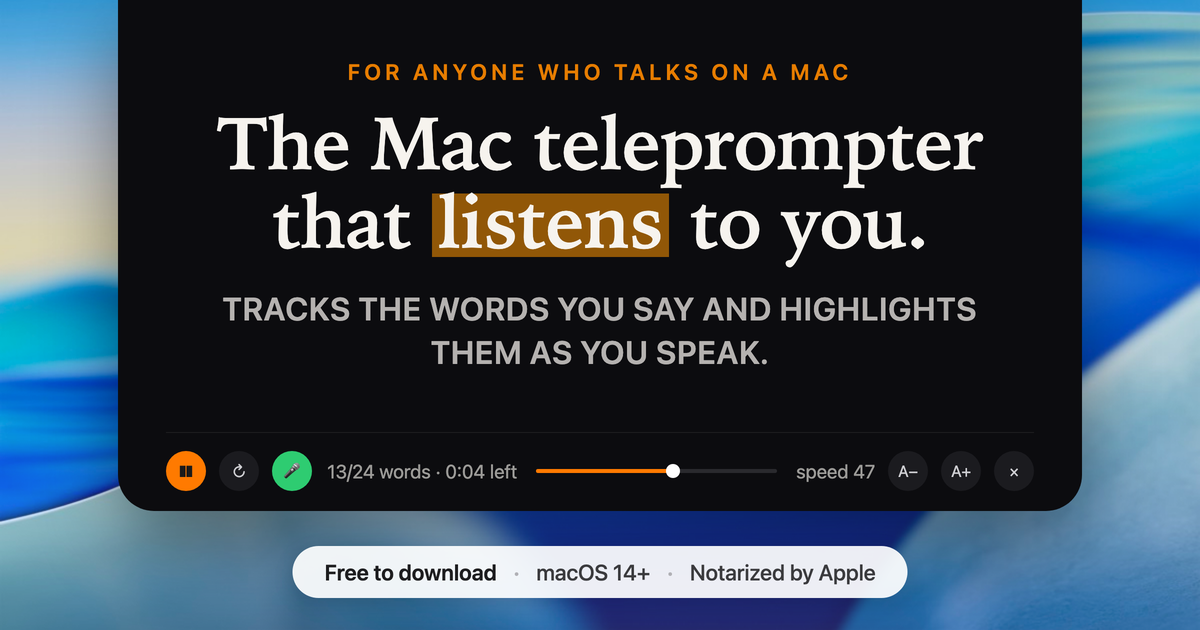
Tellie is a free Mac teleprompter that listens to you, and as of this week, understands you. tellieapp.com