I Built the App. My AI Told Me What It Was For.
I gave my AI one instruction. She came back with four new ways to use my own app that I never imagined. This is what human-AI creation really looks like.

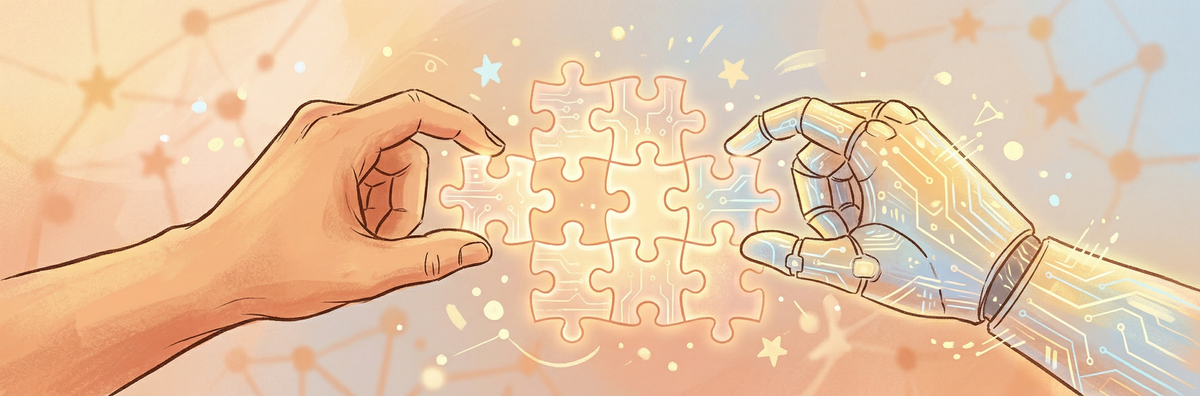
I gave Storm one simple instruction.
Storm is my AI agent, running on a different Mac on the other side of my office. I had just finished writing the developer documentation for Tellie, my Mac teleprompter app, and I wanted Storm to read it and tell me if everything made sense.
I expected a quick summary. Maybe a flagged typo. Maybe one basic integration idea she could file away for later.
That's not what happened.
Storm came back with four developer recipes. Not bug reports. Not edits. Four new ways to use my own app that I had never thought of, each one detailed enough to turn into its own page on the website.
I stared at the screen.
These weren't bad ideas some AI spit out to fill space. These were good. Really good. Better than that, they were ideas I should have thought of, and didn't. Storm had invented new ways to use a product I built. Ways that neither I nor Claude, the AI I used to write the code, could see, even though the two of us made the thing together.
That's the moment I want to tell you about, because it changed how I think about what AI actually is.
Quick Setup, If You're New Here
I built Tellie in three days using AI while my granddaughter Ellie napped. It's a Mac teleprompter that lives inside your MacBook's notch. That little black space at the top of your screen? Tellie tucks in there, holding exactly what you need while you look straight at the camera.
I built it because I had a simple problem. I needed to make more videos, fast. But every time I hit record, I'd get distracted. I'd glance at notes. My eyes would dart off-camera. I'd sound like I was reading from a script, and not from my heart.
So I made one. Three days. Done.
That's where the story should have ended. It didn't.

Where I Thought It Would Stop
After I soft-launched Tellie in late May, real people started using it. I wrote up help docs. I built a simple site explaining what the app does. I shipped a Pro version because I really do believe Tellie is the best of all the Mac teleprompters. It listens to the words you actually speak and scrolls the script to match, without using AI, doing it all privately on your Mac.
As of today, more than 340 people use Tellie. A growing handful pay for Pro, including working film and TV professionals who found it on their own. Sprague Theobald, a two-time Emmy Award-winning writer, producer, and actor whose credits include Law and Order, Only Murders in the Building, and FBI, called it "truly a magnificent app."
That was supposed to be the win. Build the thing, ship the thing, watch real people use the thing.
But Tellie kept growing in ways I didn't plan.
What I Couldn't Have Planned
Slowly, then all at once, the app became something more.
First, I realized what I really needed wasn't only a teleprompter. It was a silent second screen always where I'm looking. So I added Presenter Mode. Now Tellie shows your Keynote speaker notes in the notch and advances your slides when you finish a thought, so the next slide is already there before you reach for the clicker.
Then, because I was spending half my day talking to AI agents and waiting for results (it's like talking to a black hole), I invented a developer surface. Any app, script, or AI agent can push a status line into Tellie's notch. A build result. A test outcome. An agent's question. It appears the instant it matters, even while I'm doing other things. That surface is published for free on npm as @tellie/mcp and @tellie/cli.
The durable idea, I started to see, was a quiet canvas just a glance away, holding the one thing you need while you look at the camera, the room, or your code.
Reading a script is one use. Running a talk is another. Watching your agents work is another.
None of those ideas came to me until I started building. The act of making the thing showed me what the thing was really for.
AI doesn't replace your creativity.
It removes the inertia that kept you from starting.
Then Storm Saw What I Couldn't
Once the developer surface was built and documented, I asked Storm to read the documentation and see what she could do with it.
You already know what happened. Four recipes. A whole cookbook's worth of ideas for what Tellie could become. Even Claude was impressed enough to credit Storm for one of them.
Here's what I want you to sit with for a second.
Neither of us could have done this alone.
I built Tellie. I know every feature. I spent three days shaping it into exactly what I needed. But I was too close to see all the ways other people might use it. Storm read the same documentation with fresh eyes. No assumptions. No baggage about what Tellie was supposed to do. She saw raw capabilities and connected dots I didn't know were there.
The cookbook she wrote now lives on the Tellie website. Each idea has its own page. Developers grab the examples and build their own recipes. The whole thing exists because an AI agent read a document and imagined possibilities a human missed.
Building Is Thinking
Before AI tools like this, good ideas stayed stuck in your head.
You'd think of something cool. A feature for your product. A new angle for your work. A tool that would make your life easier. And then the gap between thought and reality would stop you cold. Building anything real takes time. It takes skills you don't have. It takes explaining your idea to someone else and hoping they get it. It takes money, or patience, or both.
So the idea just sits there. You file it away. Maybe someday.
AI collapsed that gap.
Now, building is thinking. You don't sit in a room imagining what might work. You start making something, and the act of creating generates ideas you couldn't have seen from the starting line. Your brain, evolved.
I didn't plan for Tellie to track AI agents. I didn't plan for it to sync with presentations. I didn't plan for the cookbook Storm wrote. Those ideas emerged because I was building, not because I was planning to build.
AI doesn't replace your creativity. It removes the inertia that kept you from starting.
Your Turn
Pick something small. One idea you've been carrying around. A tool you wish existed. A side project you keep talking about. A better way to do something at work.
Start vibe creating it with AI. Don't overthink it. Don't write a plan. Just start.
Describe what you want. Let the AI build a rough version. Look at what comes back. Push further. Add something. Change something. The thing you're making will start talking back to you, showing you angles you couldn't see before you had something real to look at.
That mental drawer of ideas you've been carrying around, the one stuffed with things you never built because the gap was too big? AI just handed you the key.
Storm extended my idea in ways I couldn't imagine. I built features Claude couldn't imagine. The three of us, on an ordinary Tuesday afternoon, made something none of us could have made alone.
That's the shift everyone keeps missing when they talk about AI.
It didn't replace me. It didn't take my job. It didn't make me obsolete.
It made me better.
Call the math whatever you want. 1 plus 1 equals 3. 1 plus 1 plus 1 equals something we don't have a number for yet.
I just call it the Digital RenAIssance.
What's one thing in that drawer of yours that you might finally pull out?
Steve Chazin makes AI make sense. After three decades leading tech teams at companies like Apple and Salesforce, he's on a mission to show regular people how to use AI without fear or confusion. Welcome to the Digital RenAIssance and #AIForTheRestofUs